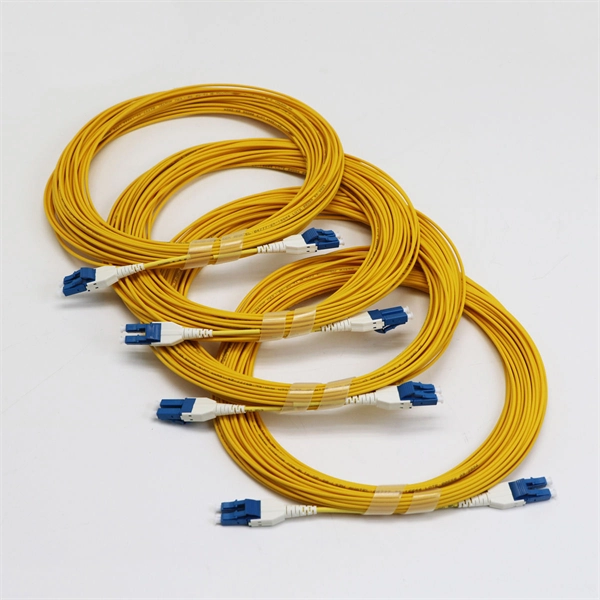
What are the suitable applications for single-mode dual-core fiber optic cables
Simplex vs Duplex Fiber Optic Cable – Key Differences
Discover the differences between simplex and duplex fiber optic cables, their pros, cons, and best applications in modern communication networks.
Types of Fiber Optic Cables Explained: Single Mode vs Multi Mode,
In practice, simplex cables are the right fit for BiDi modules or single-direction links, while duplex cables are widely preferred in most two-way networking applications.
Key Specifications of Single-Mode Fiber Optic Cables: Core Features
Explore the essential specifications of single-mode fiber optic cables, including core size, attenuation rates, bandwidth capabilities, and standard classifications like OS1 and OS2. Understand
OS1, OS2 vs OM1-OM5 Fiber Cables: Differences, Speeds, and
Explore the differences between OS1, OS2 (single-mode) and OM1, OM2, OM3, OM4, OM5 (multimode) fibers. Learn their speeds, distances, and ideal uses for data centers and telecom
Single Mode Fiber: Types And Applications
Applications such as Cable TV, Internet, and telephone services commonly utilize single mode fibers. These fibers are often bundled together into larger groups.
Understanding Single Mode Fiber Optic Cable: A Comprehensive Guide
Whether you are an IT specialist, a network manager, or just a curious individual interested in the technology that interconnects the world, knowing single-mode fiber is fundamental.
Understanding Single Mode Fiber Optic Cable: A
Whether you are an IT specialist, a network manager, or just a curious individual interested in the technology that interconnects the world,
Fiber Optic Cable Types | Omnitron Systems Guide
Explore fiber optic cable types, features, and applications. Omnitron Systems explains single-mode, multi-mode, and specialty fiber solutions.
Single-Mode Fiber: Why It''s the Go-To
This article closely examines the role of single-mode fiber (SMF) in those networks, from definition to advantages and applications to selecting a manufacturer and supplier.
Single Mode Fiber: Types and Applications
Single mode fiber (SMF) is a type of fiber optic cable that only allows one light mode to transmit at a time. Generally, single mode cable has a narrow core diameter of 8 to 10µm
Fiber Optic Cable Guide: Types, Applications, and Expert Selection
In this guide, we break down key technical differences, compare single-mode vs. multimode fiber, explain connector types, and offer selection advice tailored to your application.
Frequently Asked Questions
- Cable tray pricing adjustment coefficient
- Cable tray load rating d
- Detailed Drawings of Cable Trays
- Price range of corrosion-resistant cable trays in Venezuela
- Network Energy Data Center
- Comoros Red Laser Diode Manufacturer
- Performance Comparison of AWG Wavelength Division Multiplexer Intelligent vs Single-Mode vs Multi-Mode
- Small Copper Busbar
- Must cable trays be suspended overhead
- Lithuanian manufacturer of hollow optical fiber G 652
- South Africa EDFA25G
- Armenia Sensor Fiber Optic Cable System
- Network rack patch cord effect diagram
- Cable tray manufacturers in Africa
- Installation of Temporary Outdoor Power Distribution Boxes in Palestine
- Moroccan Transimpedance Amplifier 200G Three-Year Warranty
- Hospital-grade OLT optical line terminal 100G
- National Standard Six-Core Optical Cable
- Niger 650nm laser diode price
- One-core one-tube connector box
- Nigerian 10G Optical Module Manufacturer
- Wholesale of Korean Imported Wall-Mounted Wiring Boxes
- Ghana Optical Receiver NRZ
- Nepal Independent Switch 25G
- Busline branch connection
- Which brand of optical modules is best in Botswana
- 22 Fiber Optic Coupler
- Sweden Long Distance Optical Cable OM5
- Australian Single-Core Optical Cable Equipment
- Distribution box temperature control fan in stock
- Cable Tray Dimensions Tutorial
- Power Grid Photovoltaic Combiner Box Energy-Saving RoHS Compliance Standard
- Calculation Example of 220kV Power Grid Relay Protection
- Norwegian power fiber optic cable manufacturer
- Customization Process for New Fiber Optic Couplers for Island Use