Find out how you can install cable trays faster and easier with our innovative patented product Hermi® Fast Joint. In the video, you will be able to see a comparison between using Fast Joint or bolts and nuts to connect two cable trays. Article Summary: A compliant cable tray installation requires a thorough understanding of NEC Article 392, proper structural support, and precise installation techniques. This guide covers the critical steps, from selecting the right electrical cable tray and performing accurate cable fill. Whether you're building a commercial setup or upgrading an industrial plant, proper cable tray installation ensures neat wiring, safe access, and easy maintenance. But before you lay the first tray or clamp down a single cable, you need a solid plan. This guide breaks down the process step by step. Here is a step-by-step guide on how to install a standard metal cable tray system (e., ladder or perforated type). Before starting, ensure you have. In order to begin the job, trace a straight line where the trays will pass. This is most appropriately done using a laser level. It casts a clear light beam on the ceiling or wall that will enable an individual to determine whether the course is completely straight before any holes are drilled. The key requirements for cable tray installation include: Incorrect installation can lead to overheating, cable damage, or system failure.
[PDF]
The laser diode market in Kazakhstan is experiencing growth, driven by expanding applications in sectors such as telecommunications, healthcare, and consumer electronics. Laser diodes find use in devices such as optical transmitters, barcode scanners, and laser pointers. Technological advancements. Blue Laser Diodes Market size was valued at USD 245 million in 2024 to USD 370 million by 2032, exhibiting a CAGR of 6. 2% during the forecast period. 7 billion in 2024 and is anticipated to grow at a CAGR of 14. 4% between 2025 to 2034. Rapid proliferation of high-power laser diodes in autonomous vehicle technologies. 744 USD Billion in 2024. The market drivers for the Blue Laser Diodes Market can be influenced by various factors. These may include: Growing Demand in Consumer.
[PDF]
This report analyzes the Portuguese plastic cable trays and ducts market and its size, structure, production, prices, and trade. This report provides a comprehensive 2026 analysis and a strategic forecast to 2035. portugal is one of the leading manufacturers, suppliers or exporters of CABLE TRAYS in the global trade market. In 2020, the nation has exported CABLE TRAYS worth of billion USD. If you're looking for CABLE TRAYS suppliers or exporters or manufacturers in the portugal, refer to our below-given. This report presents a comprehensive overview of the Portuguese plastic cable trays and ducts market, the effect of recent high-impact world events on it, and a forecast for the market development in the medium term. Let's explore the characteristics of these platforms together. com provides buyers with a free hand to explore customized cable. Ramirex – Plásticos de Águeda, Lda., is a Portuguese company with 40 years of experience in the field of plastic injection molding, specializing in both standard catalog items and exclusive. PSAPLAST - PLÁSTICOS SANTO ANTÓNIO, LDA. Founded in 1955, PSAPLAST is a medium-sized company in Portugal. The global market for Cable Tray Systems was estimated to be worth US$ 3887 million in 2023 and is forecast to a readjusted size of US$ 6393 million by 2030 with a CAGR of 7. 4% during the forecast period 2024-2030. Major global Cable Tray Systems manufacturers include Niedax Group, Legrand, OBO.
[PDF]
The third part represents the number of spots in the beam splitter. The naming principle of the beam splitter is easy to illustrate with the following example. The models listed in the following table are examples After years of exploration, we can maintain all process parameters of the beam splitter stable and. A beam splitter or beamsplitter is an optical device that splits a beam of light into a transmitted and a reflected beam. It is a crucial part of many optical experimental and measurement systems, such as interferometers, also finding widespread application in fibre optic telecommunications. a laser beam) into two (or sometimes more) beams, which may or may not have the same optical power (radiant flux). Newport offers a wide variety of Beamsplitters in various shapes. Circular beamsplitters, plate beamsplitters and cube beamsplitters can be purchased for polarizing or non polarizing beamsplitting. Thorlabs offers a wide range of optical beamsplitters. Our plate beamsplitters have a coated front surface that determines the beam splitting ratio while the back surface is wedged and AR coated in order to minimize ghosting and interference effects. Additionally, beamsplitters can be used in reverse to combine two different beams into a single one. Beamsplitters are often classified according to their construction: cube or plate.
[PDF]
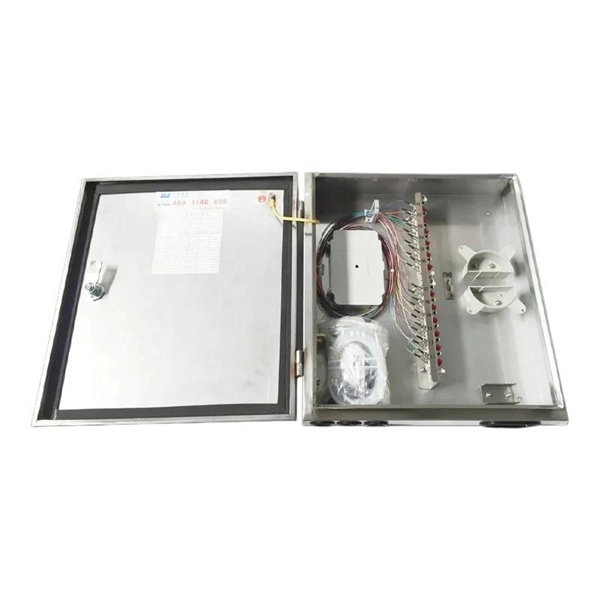
You simply multiply the number of splices by the estimated loss per splice. It's that easy! ✨ Let's say you have a long fiber run that requires 4 fusion splices to connect different cable segments. 4 dB is the total attenuation you'll add to your loss budget just for the. Fusion splicing is the process of fusing or welding two fibers together usually by an electric arc. Fusion splicing is the most widely used method of splicing as it provides for the lowest loss and least reflectance, as well as providing the strongest and most reliable joint between two fibers. There are several ways to know the number of multi-spliced cores. For example, 12 core fibers, 12*2=24 cores, 12 cores at the beginning and 12 cores at the end; 2. Count the number of optical fiber. Calculating the total loss from splices in a cable run is wonderfully straightforward. Connectors: Total number of connectors in design. Laser: A device which produces a single frequency light. The guide provides the complete workflow, covering safety precautions, tool selection, fiber preparation, fusion operation, quality control, and. Recommendation ITU-T L. 12 specifies splices of single-mode and multimode optical fibres. It describes suitable procedures for splicing that should be carefully followed in order to obtain reliable splices between single optical fibres or ribbons.
[PDF]
Single-mode fiber optic cable typically has a single core. This means that it consists of a single strand of glass fiber that carries light signals. The core is the central part of the cable through which the light travels, surrounded by a cladding layer that helps guide the light. One key factor is the number of cores, which impacts how much data you can transmit. This post will guide you through understanding fiber optic cores and selecting the perfect cable for your needs. Single-mode: A. The number of optical cores in an optical fiber is the total number of equipment interfaces multiplied by 2, plus 10% to 20% of the spare quantity, and if the communication mode of the equipment has serial communication and equipment multiplexing, you can reduce the number of cores. The number of. Common fiber cores include 1 core, 2 cores, 6 cores, 8 cores, etc., and there are many types. The total number of cores for a 1pc fiber patch cable is calculated as the number of. The most common type of fiber optic cable used in telecommunications is single-mode fiber, which usually has a single core.
[PDF]
For most setups, cables with 12, 24, or 48 cores are common choices, ensuring compatibility with modern equipment and ease of management. The number of optical cores in an optical fiber is the total number of equipment interfaces multiplied by 2, plus 10% to 20% of the spare quantity, and if the communication mode of the equipment has serial communication and equipment multiplexing, you can reduce the number of cores. The number of. Fiber cores are the heart of fiber optic cables, transmitting light signals that carry data. Made from either high-quality glass or plastic, the core plays a critical role in determining the cable's performance. The total number of cores for a 1pc fiber patch cable is calculated as the number of. One key factor is the number of cores, which impacts how much data you can transmit. This post will guide you through understanding fiber optic cores and selecting the perfect cable for your needs., and there are many types. When selecting fiber, the first step is to determine single mode or multimode, and. Fiber optic cables consist of multiple thin strands of glass or plastic, known as “cores. ” These cores carry the data signals via light. The number of cores you choose directly impacts the capacity and. Connecting fiber optic cables to patch panels may seem like a straightforward task, but improper connections can lead to signal loss, decreased network efficiency, and even costly repairs. In this post, you'll.
[PDF]
8032 is the gold standard for implementing ring networking topographies. When implemented properly, G. 8032 management safeguards Ethernet traffic and achieves recovery times of less than 50 milliseconds (ms). This document provides basic background information regarding adding ring redundancy in your wired Ethernet networks. It will explore the N-Tron proprietary protocol N-Ring and how it is a step up from IEEE Spanning Tree and Rapid Spanning Tree Protocol (STP, RSTP). Examples for creating a. Ethernet Ring Protection Switching (ERPS) is an effort at ITU-T under G. 8032 Recommendation to provide sub-50ms protection and recovery switching for Ethernet traffic in a ring topology and at the same time ensuring that there are no loops formed at the Ethernet layer. This ITU-T specification is. Device Level Ring (DLR) is a Layer 2 protocol that enables redundancy in a ring topology, providing fast network fault detection and reconfiguration for industrial networks. DLR is an EtherNet/IP™ protocol that is defined by the Open DeviceNet® Vendors' Association (ODVA). 8032 management safeguards. The ITU-T G. ERPS is similar to spanning-tree protocols, but ERPS is more efficient because it is customized for ring topologies.
[PDF]
Wireless Capabilities: It supports 802. 11an+ac protocols for 5GHz and 802. 4GHz, with a 2x2:2 MIMO configuration for both bands 2. 4GHz, categorizing it as an AC1200 class device 2. NOTE: During configuration or flashing a device, the only things that should be hooked to the device is the computer and power. This device is NOT RECOMMENDED for future use with OpenWrt due to low flash/ram. DO NOT BUY DEVICES WITH 8MB FLASH / 64MB RAM if you intend to flash an up-to-date and. Hardware Details: The Phicomm K2P (A1) is a wireless router released around June 2017, manufactured in China 2. It features a MediaTek MT7621AT CPU (880 MHz, 2 cores), 16 MiB of flash memory, and 128 MiB of RAM 2. 11bgn for. Over the past year, the Phicomm K2 (model PSG1218) has become one of the most frequently discussed legacy routers in DIY networking communities—not because it's new, but because its hardware remains unusually capable for its price point, especially after flashing OpenWrt 1. 4 GHz and 5 GHz radios. It has five Fast Ethernet ports, later revisions featuring five Gigabit Ethernet ports, and a moderately fast processor. This device does not have sufficient resources (flash and/or RAM) to. To find the best router for fiber internet, we used our expertise to select items based on key specs, such as speeds, coverage, wireless standards, security, weight, and additional features. We conduct in-house testing to check their signal strength, speed, and file transfer speed.
[PDF]
Fiber internet can deliver lightning-fast speeds, and a capable router is needed to take full advantage of that. That said, we recommend giving the NETGEAR Nighthawk RS700S a shot, as it supports the Wi.
[PDF]

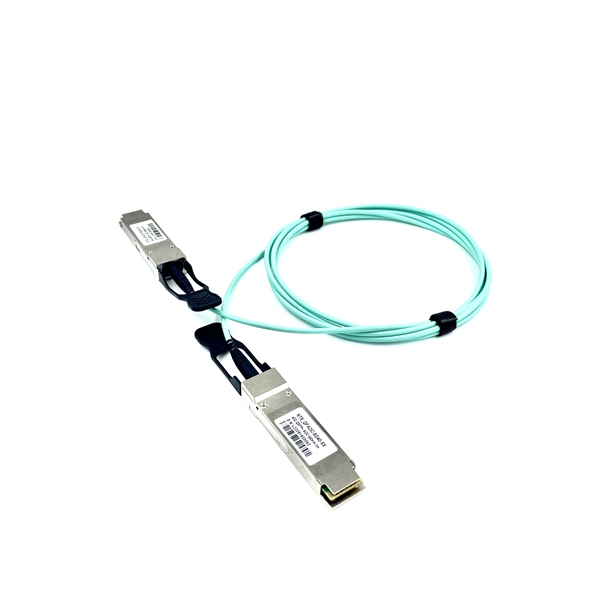
For compatibility between 100G Ethernet optical interface modules and switching fabric modules, see Appendix B FRUs and compatibility matrixes in H3CCR16000-F Routers Installation Guide. For Delaware warehouse orders placed before 4:00PM EST Dense, high-capacity spine and leaf and top-of-rack switches for AI fabrics and data center networks, delivering performance, flexibility and efficiency Designed for NVIDIA B300, delivering 1. The interface. The TWD (Thick walled duct) is composed of thick and strong microtubes, and this provides strong protection against soil pressure while the thin outer sheath helps fast and easy operation at installation site. Variety of TWD line-up enables a cost-effective construction of optical infrastructure. With today's 100G optics, we're at the point where it now influences your network hardware cost and fiber infrastructure design. Cisco's vision is to simplify 100G pluggable optics. With fewer components in the pluggable module, we can scale manufacturing volume and cost to the level of today's 10G.
[PDF]
Yes, you can connect two routers to one fiber modem, but understanding the 'how' and 'why' is crucial for optimal network performance. This guide clarifies the possibilities, practical methods, and potential pitfalls, ensuring you maximize your home or small office network. There's no magic number as to how many devices fiber internet can support. Your speed, the size of your home, your router and your level of connectivity will all factor in to how well your devices perform. How many devices you have The average home has over 20 online devices. You probably. One common question arises: Can you have two routers with AT&T Fiber? The short answer is yes, but it comes with nuances. AT&T's service requires their proprietary gateway (a modem-router combo), but you can add a second router—your own—for enhanced features like wider WiFi range or advanced. Every router has a limit to the number of devices it can efficiently support at once. The maximum device capacity varies depending on the router's hardware specifications, Wi-Fi® standards, and intended use case. Can I Connect Two. Routers are designed to handle a certain number of devices, but the exact capacity varies depending on the type and quality of the router. Useful settings: separate bands, prioritize traffic, wire fixed lines, and limit clients. With 15-20 WiFi clients.
[PDF]