39 A/mm² is safely below the typical 1. The busbar must survive the heat from a short-circuit fault. Use the IEC 60949 adiabatic formula: $S ge frac {I_k times sqrt {t}} {k}$. Since 1. Instead of using many separate wires, a busbar provides a single, organized path for carrying high current between different electrical components. Bus bars are the essential components in the electrical distribution systems (EDB) serving as primary conductors that carry current between 1). Circuit breakers, 2). Proper sizing is the essential for safety, efficiency and compliance with international electrical. Click Calculate to see the required area and recommended size. Full IEC Verification Enter your base parameters as in the standard method. This disables the safety factor and reveals IEC-specific inputs. Enter derating factors, short-circuit current. The Busbar Size Calculator helps engineers and electricians find the right copper or aluminum busbar dimensions based on current capacity, material type, and environmental conditions. The current rating is calculated from the conductor cross-sectional area, material (copper or aluminium), and maximum. A bus bar is a solid bar or metallic strip that is used for power distribution. Busbars have extensive use inside panel boards, busways, and switchgears. The busbars of right sizes ensure a safe and secure current distribution with ease and flexibility. We can consider a busbar as a node or a group.
[PDF]
Ever wondered how busbars, the unsung heroes of electrical distribution, are processed and installed? This article delves into the intricate steps of busbar selection, preparation, and installation, ensuring efficient and safe power distribution. You'll discover the essential tools and techniques. Discover the four types of busbar processing machines, from manual to fully automated solutions. Busbar processing machines play a pivotal role in the electrical industry, particularly in the fabrication and. Cut, bend, and punch smoothly to boost productivity for manufacturers and contractors in electrical distribution. Deliver high-precision, efficient metal bending with intelligent automation solutions for your electrical engineering projects! Enhance your busbar manufacturing with precision and. Established in 2005, LT Machinery has over 20 years of experience in the research and manufacturing of busbar processing technology. LT Machinery provides a complete set of solutions for punching, cutting. Cut, Punch and Bend all sizes of copper or aluminum busbar. Field service tools through to in-plant production systems. Capacity: 3/8" x 4-1/2" (10 x 120 mm) A complete cut, punch and bend system Single hydraulic cylinder and work area. Easily change between cutting, punching, and bending.
[PDF]
Operating at 10kV with a normal-pressure sealed structure, it uses air as the insulating medium (eliminating reliance on SF₆ gas) and features modular cabinet designs that can be flexibly combined. The AHVAC10KV10MABT is a ac-dc high voltage power supply designed for ac-dc benchtop high voltage power supplies. It converts 90 to 230V input into a high voltage output up to 10kV, with a maximum output current of 10mA. The module is designed for stable AC-DC high voltage conversion, offering. In electric power distribution, a busbar (also bus bar) is a metallic strip or bar, typically housed inside switchgear, panel boards, and busway enclosures for local high current power distribution, transmission, or switching substations. They are key components in electrical systems that can efficiently collect and distribute electricity. In this blog, I will introduce busbars in detail. Its primary role is to carry large current loads and connect multiple circuits together. When the required voltage is achieved, then rotate the potentiometer lock clockwise to High efficiency AHVAC10KV10MABT, is designed for achieving AC-DC conversion from AC voltage. The 10kV (Flexible Combination of Multiple Cabinet Types) Normal Pressure Sealed Air-Insulated Switchgear / Ring Main Unit is a versatile medium-voltage power distribution system designed to adapt to diverse operational needs.
[PDF]
Its primary role is to carry large current loads and connect multiple circuits together. Think of a bus bar as the main highway for electrical current—allowing it to flow between components with minimal resistance and voltage drop. In electric power distribution, a busbar (also bus bar) is a metallic strip or bar, typically housed inside switchgear, panel boards, and busway enclosures for local high current power distribution, transmission, or switching substations. Think. The electrical panel, often called the breaker box, functions as the central distribution point for all electricity entering a home. While circuit breakers are the visible safety components, the internal system that routes and distributes the power is built around the bus bar. It acts as a central hub, connecting multiple circuits and ensuring current flows efficiently. A busbar's main function is to conduct and distribute large electrical currents from one source to multiple circuits within an enclosure, acting as a central, high-capacity connection point. My insights show that understanding the practical function is key. As I've seen in the field, the textbook.
[PDF]
IEC 61439 is a standard developed by the International Electrotechnical Commission (IEC) that covers design verification for low-voltage electrical products and assemblies. Busbar design within Medium Voltage (MV) switchgear is a critical aspect, fundamentally ensuring the safe, reliable, and efficient operation of power systems. The IEC 61439. Annex D was introduced in the april 2020 version of UL 508A. It clarifies what was previously common but not formally correct practice. A manufacturer of electrical automation panels is not required to use a certified busbar system or to subject it to short-circuit tests, provided that it complies. A recent study found that there are roughly 30,000 arc flash incidents in the United States each year, many of which are powerful enough to cause significant injury to workers and costly damage to equipment2. The adoption of busbar power distribution systems on a global scale has accelerated in the. Double spacer for easy leveling and connecting on both sides (snubber. ). From time to time we are asked what bus spacings are required by ANSI standards for switchgear. Those who ask are frequently surprised by the answer: None. ANSI switchgear standards are generally performance standards. Dielectric tests, power frequency withstand for all voltages and impulse.
[PDF]
The IEC 61439 standard applies to busbar assemblies that will be installed in electrical applications with a voltage rating up to 1000 V (for AC) and 1500 V (for DC). IEC 61439 is a standard developed by the International Electrotechnical Commission (IEC) that covers design verification for low-voltage electrical products and assemblies. Generation, transmission, distribution and control of electric energy. Special service conditions, for example in ships and in rail vehicles provided that the other relevant specific requirements are complied with. Electrical equipment of. The IEC standard for busbar sizing provides detailed guidelines to help engineers select appropriate busbar dimensions. This ensures that systems operate reliably without overheating or causing electrical hazards. The new series of IEC 61439 standards were published in January 2009. This standard has brought considerable clarity in technical interpretation. It serves as a reference for the construction of. In low-voltage power distribution, the cabinet is never just a cabinet, and the busbar is never just a strip of copper. Behind every reliable low voltage switchgear lineup is a design balance that is harder than it first appears: current must flow safely, heat must be controlled, internal space.
[PDF]
Temperature measurement on a 10kV fully insulated busbar is studied in , also for the joint conductor, for which the temperature rise is lower because of the heat dissipation. The temperature can be decreased by using slots in the contact area, as presented in. Copper busbar technology is widely used with the aim to achieve electrical connections with power distribution systems because of their flexibility and compactness. The thermal analysis takes into account the heat conduction and convection of a copper busbar system used to supply a test bench with. IEC 61439 is a standard developed by the International Electrotechnical Commission (IEC) that covers design verification for low-voltage electrical products and assemblies. This standard defines the design verification, test requirements, and thermal performance of the assemblies. The IEC 61439. If the busbars are coming from a piece of switchgear then the temperature rise for those busbars would be governed by the standard you mention. Do you have any info on the temp rise for the transformer? “Do not worry about your problems with mathematics, I assure you mine are far greater. It includes two parts: the power conditioning system (PCS) converter, which connects the system to the grid and is the key component to provide grid support services, and the.
[PDF]
🔧 Step 1: Busbar surface preparation & cleaning 🔥 Step 2: Welder setup ( [Specify type: TIG/Resistance/Laser]) ⚡ Step 3: Demonstration of welding technique. more. Seamless bus pipe is an extruded tubular product used to convey electricity. It is manufactured to a “nominal,” not actual, inside diameter. The wall thickness is described by a "schedule. " The schedules are determined by the American Standards Association. Sometimes we tig alot of the prefab and wire weld our field welds. Some weld joints need prheat others dont. We run GMAW-P on some of the thicker parts in. Weld your busbars with ultrasonics to permanently benefit from strong connections without contact resistance — even with different metals like aluminum and copper. Discover the benefits of our innovative welding technology for more output, control, and efficiency in your production! to 12 s per. The connection of copper busbars in power stations mainly involves two methods: bolt fastening and welding. Copper has excellent electrical conductivity, thermal conductivity, heat resistance, and formability. Industrial pure copper is not less than 99. Copper Welding Characteristics The. Diffusion welding creates a permanent bond between metal surfaces by applying pressure and high temperatures for an extended period of time. Diffusion welding relies on atomic diffusion between pressed surfaces, forming a robust, long-lasting bond. Diffusion welding can handle dissimilar material.
[PDF]
(1) The admissible load of a complete system depends on the system topography and the application parameters. Factors of influence are ambient temperature, air circulation, busbar load, distribution of busbar loa.
[PDF]
With a 63A rating at 230/400V, this power distribution box offers robust performance, making it ideal for demanding applications in garages, caravans, and outbuildings. 58. Designed by BAHRA, the Load Centers (LC) use the best selection of materials, cutting edge technology and class leading features to ensure safety, durability and performance. The remarkable Load Center designs are a result of an extensive effort from a team of some of the best industrial designers. BSLI is an original equipment manufacturer (OEM) of custom electrical power distribution products. BSLI guarantees its customers fast, personalized service, quality components, and custom-designed equipment at competitive prices. OUR manufacturing and engineering capabilities have expanded to. We offer a wide range of package substations that are designed to efficiently distribute electrical power from the power station to the consumer. They are suitable for a wide range of commercial and industrial applications. The degree of protection is in accordance with IEC 60529. Ascon Control WLL is Bahrain's one of the most reliable manufacturer of Control Panels, Distribution Boards, Substations, Sub Main Switchboards. Our advanced payment security system ensures confidentiality by encrypting your information during transmission using AES (Advanced Encryption Standards) and SSL (Secure Socket Layer) protocols. Your payment details are 100% secure as we do not share your payment details with third party sellers.
[PDF]
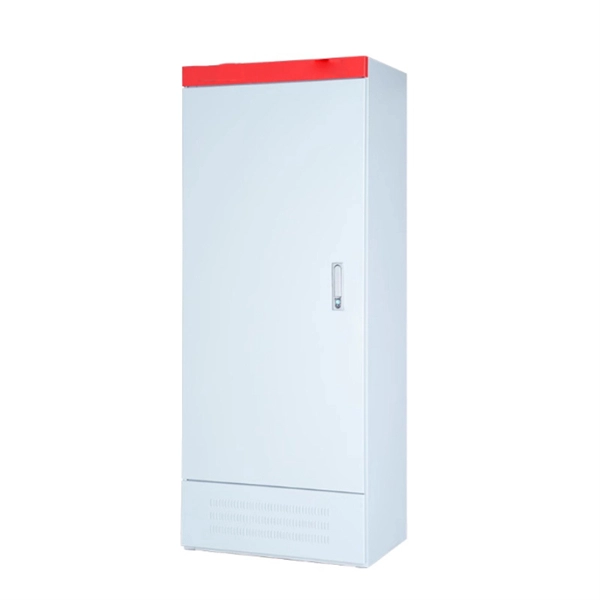
This report provides a comprehensive analysis of electrical distribution board (DB) box sizes, including physical dimensions, electrical capacities, and market trends based on current 2025-2026 standards. This guide helps you determine the correct dimensions based on wire fill capacity, device requirements, and installation environment, ensuring a safe and efficient electrical system. Selecting the appropriate junction box size prevents overcrowding, overheating, and potential hazards. Learn how to. Choosing the correct electrical box dimensions is essential for safe wiring, code compliance, and long-term reliability. NEC Article 408 covers switchboards, switchgear, and Panelboards installation and applications. Electrical enclosure sizes are not universal, but most manufacturers follow common size families. This guide explains typical wall-mount and floor-standing dimensions, how to read catalog sizes, and how to choose the right enclosure size for your layout. There is no single global chart for standard. stallation and use of boxes. The article includes table references that guide the electrician in the selection of the proper box size necessary to safely accommodate ele trical service requirements.
[PDF]
When selecting an SFP module, consider the following factors: Ensure the module matches the speed of your switch or router port (e. Depending on your deployment, choose 850nm, 1310nm, 1550nm, or even CWDM/DWDM wavelengths. SFP (Small Form-factor Pluggable) is a compact, hot-pluggable network interface module used to connect network devices (switches, routers, firewalls) to fiber optic or copper cables. Think of it as the “translator” for your network equipment, converting electrical signals into optical signals. SFP optical modules are the unsung heroes of fiber networking—the essential interface that converts electrical signals from network equipment into optical signals for transmission over fiber optic cable, and vice-versa. Choosing the wrong SFP optical module can result in link failure, instability. Optical transceivers are at the heart of modern fiber networks - connecting switches, routers, and servers with blazing-fast links. Cisco's SFP, SFP+, and XFP modules are among the most widely used standards across enterprise and carrier environments. They determine data rate, transmission. With our expert guide, you can easily maximize network performance while optimizing your expenses the next time you're choosing a switch/router, optic, or supporting cabling. It converts electrical signals into optical (or copper) signals and vice versa. It allows network administrators to adapt hardware to different media types and.
[PDF]
Its entrance shall be from the ground floor level and its height shall not be more than 2. Scope Definitions General requirements for electrical installations Customer service point Excess current protection Earthing and earth leakage protection Wiring and distribution arrangements 700 Wires and cables 701 Flexible cords and cables 702 Joints, connections and terminations 703 Bunching. The EWA has adopted many of the clauses from the latest editions of the IEC, IEE & KUWAIT Regulations, modifying them to suit Bahrain conditions where necessary. It is the intention of the EWA to re- examine these Regulations periodically and to issue amendment sheets whenever it is considered. EWA's Standards and Regulations outlines essential guidelines and requirements to ensure the safe, sustainable, and efficient management of resources and services. The first version of the Unified Guidebook of Building Permit Regulations was issued to cover the prerequisites and. For any complaints or comments regarding published and unpublished decisions and regulations in the Unified Building Code, please contact us at the following numbers:. This document presents a revised edition of the Regulations for Electrical Installations, superseding the 1985 version. Updated according to international standards while considering the local context in Bahrain, it establishes guidelines for electrical installations, including coordination between.
[PDF]

Use this guide to compare the most common pallet footprints, heights, and load notes. Each size links straight into the Pallet Calculator so you can plug in box dimensions and verify TI‑HI, weight, and container fit. Need a specific dimension question? Jump into the dedicated guides below: What are.. Combination illuminating distribution box is suitable for distribution control of modern buildings,such as large stores,guesthouse,stations,commercial net points,laboratories,factories and enterprises,used in AC 50-60hz,below 500V illuminating and mini power controling circuit as over. Size and weight limits are as follows. Reference If length and weight are exceeded If length and weight of your package exceed the limit, please contact "International Courier Service UGX Support Desk" at 0120-09-5931. Note Minimum size and weight Minimum size and weight are 14cm for length and 9cm. Contact us via call/SMS/Whatsapp Contact Information: Yong Huat Electrical Enterprise Sdn Bhd (751330-T) 28, Jalan Sungai Kapar Indah 3A, Taman Sungai Kapar Indah, 42200 Klang, Selangor. Waterproof, dustproof, with a protection level of IP65, UV resistant, and a scorching wire temperature of 650 °C. Gland holes can be opened according to the customer's specifications, for convenient installation while maintaining IP integrity. Application The Ex9XG series plastic.
[PDF]
The centralized splitter approach typically uses a 1×32 splitter in an outside plant (OSP) enclosure, such as a fiber distribution terminal. The 1×32 splitter is directly connected via a single fiber to an OLT in the central office. They are typically installed in each optical network between the PON OLT (optical line terminal) and ONTs (optical network terminals) that the OLT serves. Generally, two kinds of fiber optic splitters are popular, which are FBT splitters and PLC splitters. The differences between the two have been. A fiber broadband provider typically determines and overall split ratio for the network, such as 1x32 or 1x64, and uses combinations of splitters to meet that ratio with each PON port. 1x32 splits were common in North America for G-PON architectures. As XGS-PON continues to be adopted, some service. This comprehensive guide explains how optical splitters work, what types are available, and how to select the optical splitter best buy or optical cable splitter best buy for your network deployment. What Is a Fiber Optic Splitter? A fiber optic splitter is a passive optical component designed to. Star couplers are used for their uniform splitting, while WDM splitters are used to split light beams of different wavelengths. Application Areas Fiber optic splitters are used in various areas, including active optical networks, passive optical networks, FTTX access networks, and measurement.
[PDF]