Pre-galvanized steel trays offer economical solutions for indoor installations but typically last only 5-7 years in humid environments. For coastal industrial settings, hot-dip galvanized steel cable trays provide superior corrosion resistance, extending service life beyond 15 years. These trays carry important power and communication cables, and if they fail, things can get messy and unsafe. Understanding Cable Tray Service Life helps you plan, budget, and keep everything running smoothly. We think it's key to know what affects how long a cable tray does its job well. Critical. Cable trays refer to a rigid structural system composed of channel or ladder straight sections, elbows, components, and supports (arm-type brackets), hangers, etc. to provide close support for cables. Depending on the structure, cable trays are divided into ladder cable trays, channel cable trays. The warranty period of cable trays usually varies according to the manufacturer's regulations and the usage environment. Generally speaking, the warranty period of cable trays is between 5 and 20 years. The following are some factors that affect the warranty period: 1. Materials and manufacturing. Wire mesh cable trays have established themselves as a preferred choice for cable management in various industries due to their durability, efficiency, and adaptability. Unlike conventional cable management systems, wire mesh trays are built to last, offering long-term reliability that spans.
[PDF]
Fiberglass trays are the least effective at dealing with heat. Fiberglass cable tray loses 10% of its rated strength at temperatures as low as 100°F. Eaton's B-Line series fiberglass cable tray systems provide an economical support system with superior strength at room temperatures and dependable load bearing capabilities at continuously elevated temperatures. While fiberglass cable tray systems utilize a heat-cured resin that doesn't melt at. Choosing fiberglass cable trays for elevated-temperature environments requires moving beyond supplier claims. Your assurance as an engineer should be based on evidence, specifically the Air Thermal Aging Test Report. You don't need to be a materials expert. You need to know how to evaluate three. Our trays are manufactured from Fiberglass Reinforced Plastic (FRP) using high-grade resins to ensure outstanding corrosion resistance, mechanical strength, and electrical insulation. FRP Cable Trays are a superior alternative to conventional steel or aluminum trays, particularly in aggressive. Fiberglass Ultra-Sleeve High-Temperature Sleeving is a protective sleeve that is ideal for those areas where your cable runs through a particularly harsh environment of flash heat or flame, chemical or mechanical abuse.
[PDF]
This guide explains how to make 90° bends, vertical bends, tees, and offsets in wire mesh cable trays safely and professionally. Horizontal 90° Bend (Flat Bend) 2. Tee (T-Junction) Bend 4. Since the jaws of the bolt cutter drags a layer of zinc across the cut end and forms a protective layer. When a wire cable tray is cut, the fact that a. Wire mesh cable trays are widely used because of their flexibility and easy on-site modification. Unlike perforated trays, bends can be created directly at site without expensive fittings. Includes a full demonstration on how bend steel cable tray using a crimping to. more. ns and Cross Joints. These arrangements can be created by using our standard cable tray sections and removing specific pieces as directed using the Cutter tool (WR-TRAYCTR65), and then bending and securing the tray pieces together using Couplers (WR-CPLKK34), Corner Strength Bars (WR-CNRSBAR-EZ). Before bending a cable tray, it is crucial to prepare it properly. This involves a few essential steps to ensure a successful bending process. The first step in preparing the. This manual is designed to guide workers through the detailed production process of ladder cable trays, including the manufacture of horizontal elbows, tees, crosses, reducing bends, and vertical bends, with emphasis on precision, safety, and quality control. What's Involved in Producing Ladder.
[PDF]
Stainless steel cable trays are suitable for laying cables in chemical and purification plants, refineries, offshore plants, oil and gas tunnels and places where hygiene is of great importance. Heavy duty flange stainless steel cable tray for laying heavy. Thickness: 0. These trays are made from high-quality stainless steel, ensuring longevity and reliability in harsh environments. With side height 100mm. Perforated Cable Tray System expertly constructed from high-grade stainless steel, offering exceptional durability and resistance. Light-duty applications, such as LAN or control wiring in commercial spaces, may require trays with 1. The thickness of the tray depends on how frequently it is supported. 5 to 3 meters), thicker trays are required to prevent sagging. 5 mm or. Material: stainless steel 304, 316. From an engineering standpoint, cable tray dimensions are not. Ladder cable tray is available in widths of 6, 9, 12, 18, 24, 30, 36, 42 and 48 inches with rung spacings of 6, 9, 12 or 18 inches. Note that wider rung spacings and wider cable tray widths decrease the overall strength of the cable tray. Specifiers should be aware that some cable tray.
[PDF]
Trapezoidal Cable Tray: Trapezoidal cable trays are characterized by their trapezoidal structure consisting of two side rails connected by a crosspiece. This design allows for excellent ventilation and heat dissipation, making them ideal for high-capacity cable management. Fiberglass - Technical Data Structural Characteristics of Cable Tray and Supports When viewed in its installed condition, any cable tray system performs functionally as a beam under a uniformly distributed load. There are four basic beam configurations typically found in a cable tray installation. -piece tray istypically used in applications where visual esthetics are important. It is available with a ventilated or solid bottom. Channel tray can protect against. Steel cable trays come in various types, each offering unique features and catering to different applications. Among them, the stainless steel cable tray is highly recommended for use in the petroleum, chemical as well as television industries. Its lightweight nature, elegant appearance, easy. This appendix provides the design criteria for seismic Category I cable trays and their supports. Seismic Category II cable trays and their supports are also designed utilizing the design criteria of this appendix. These trays have large space and good ventilation performance. Structural Design and Flexibility: The structural.
[PDF]
By providing a structural framework, cable trays protect the cables from mechanical damage while simplifying the overall layout of a facility's electrical infrastructure. A cable tray system is a structured assembly used to support and organize insulated electrical cables for power distribution, communication, and control signals. These systems create a secure, rigid pathway to manage extensive networks of wiring in commercial and industrial environments. Far superior to traditional conduit in many applications, cable tray systems offer unparalleled accessibility for maintenance. en completely installed, without damage either to conductors or structural system use maintain spacing or to keep cables in place when the tray is ect the minimum bend ra-dius for cables as they exit the bottom of the cable tray. A rung spacing of 6 to 9 inches (150 to 230 mm) is preferable when. Explore the world of cable trays, their types, materials, benefits, standards, and installation considerations for efficient cable management. Cable trays are integral components in modern electrical and data cable management systems. They provide an effective and versatile solution for routing and. Cable tray systems provide a safe, organized, and flexible method for supporting insulated conductors and cables in commercial and industrial electrical installations. When properly selected and installed, cable trays simplify routing, improve accessibility, and support future expansion while.
[PDF]
Advantages and disadvantages of using cable tray: easy installation, ventilation, cost-effective, limited load capacity. Solid-bottom Cable trays for fiber-optic cable installations where drooping of cables may affect system performance, solid-bottom (non-ventilated) cable trays are preferred. However, the main reason for selecting solid-bottom trays is a concern for electromagnetic/ radio-frequency interference. Cable trays are a modern and essential solution for cable management, widely used in both commercial and industrial settings. They offer an organized and secure way to support electrical, data, and communication cables, ensuring easy access and maintenance. Advantages and disadvantages of using. The following table compares ladder and perforated cable trays based on design, application, airflow, cost, and cable support: Cable trays offer several key benefits: Easy Installation: Quick and easy to install. No special training or expertise is needed. Easy Maintenance: Since cables are. Given cable trays are used in a wide variety of environments, from residential to industrial, it's fair to expect that there are plenty of advantages to using them. Learn about ladder, perforated, solid-bottom, wire mesh, and channel trays in this complete guide. What is Cable Tray Systems? 1.
[PDF]
This guide discusses common cable tray problems, from loosening and corrosion to grounding issues and installation errors, along with strategies for prevention and resolution. Understanding the root causes of cable tray failures is the first step toward ensuring system reliability. Let's delve into. Steel cable trays form the backbone of organized and efficient electrical wiring in industrial, commercial and infrastructure projects. High-current power cables placed close to sensitive control or communication lines also help to cause heat generation. Refer the below link: How to do the voltage drop calculation of instrument cable? How. The entire cable line is completely burned or one of the phases is damaged, causing all the current relays on the distribution cabinet to activate. The damage at the fault location is extremely severe. Short circuits occur in all phases of the cable, which will also trigger the interlocking. The cable trays aren't connecting no matter what angle I try to connect them and I am presented with the following error message in the image attached despite loading all the cable tray connectors. At first I thought the angles were perhaps too much for the software to automatically connect but. There is no restriction as to where the cable tray system is installed. All metallic cable trays shall be grounded as required in Article 250. 96 regardless of whether or not the cable tray is being used as an.
[PDF]
Choose from our selection of cable tray mounting brackets in a wide range of styles and sizes. Same and Next Day Delivery. Cut, bend, and connect the wire mesh trays to route cable and hose in configurations such as curves, slopes, and tees. They are a lightweight option for organizing bundles of cable and hose while keeping them accessible. These are the most corrosion-resistant tray systems we offer for. Cable Tray Splicer, Washer Kit, Material: Carbon Steel, Finish: Electroplated Zinc, Package of 50 Category: Cable Tray Splicer Kits Sign In or Register to view pricing and more. Cable Tray, 2" Depth x 4" Width x 10' Section, Material: Carbon Steel. Finish: Electroplated Zinc. Category: Straight. 3-Piece Staked Bolt/Washer And Nut Combination. Cable trays are used as an alternative to open wiring or electrical conduit systems, and are commonly used for cable management in commercial and industrial construction. Cablofil is the global gold standard for total cable management. Constructed from our dependable ladder tray components. Cable trays are a type of cable management system used to support and organize electrical cables and wires in commercial, industrial, and residential settings. They are typically made of metal, such as steel or aluminum, and are designed to provide a safe and efficient way to route and protect.
[PDF]
This guide explores the top cable tray manufacturers in the Middle East and provides tips on making the best choice for your project. We established in 2006 in Dammam KSA as a sister concern of DACO (Diyar Alwatan trading and Co). Welcome to Bonn Metal Construction Industries LLC (BMCI), one of the leaders for manufacturing cable management systems and providing a range of premium cable trays, ladders, and accessories. Producing 12,000 tons per annum, BMCI acts to support the industrial and commercial development throughout. West Port Cable Tray is recognized as one of the leading manufacturers and cable tray suppliers in UAE, specializing in premium cable management systems within the Middle East. Our product range is meticulously designed to ensure durability, compliance with regulations, and operational efficiency. Listed below are the Top Cable Tray Suppliers in UAE, offers different types of cable trays to business these include - electrical cable tray, industrial cable trays, plastic cable trays, cable tray trunking, stainless steel cable trays, ladder cable trays, wall mounted cable tray bend with control. About Us Founded in 2003, Power Solution Industries, a name recognized for Excellence in Engineering. Projects Across the Middle East, PSI has executed over 500+ projects in a wide variety of sectors. All rights reserved Power Solution Industries has emerged as a world-class.
[PDF]
Ans.The main purpose of the cable tray is to keep the cable and wire safe and secure. These trays keep wires in place and make it easier for maintenance personnel to monitor and find wiring-related components. Ans.The Cable Management Market is predicted to grow at a CAGR of 10.76 percent over the next five years. Ans.Cable trays provide flexibility in wiring system design, simplicity, and lower installation costs. In facilities wherein the gear is added, removed, or transferred, cable trays provide a flexible advantage. Explore More: 1. Fiber Optic Cable Manufacturing Companies In India - 10 Best Manufacturers 2. Cables: Top Manufacturers, Suppliers & Expor.
[PDF]
This guide explores the top cable tray manufacturers in the Middle East and provides tips on making the best choice for your project. is one of the trustworthy Cable Tray Manufacturers in Palestine that is here to fulfill all your wire mesh and netting tools needs. We believe in building fruitful business partnerships. Every buyer chooses us first because of. Started back in 1983, Cable House is a recognized name engaged in manufacturing and supplying wide range including Hose Clamps, Cable Ties, Crimping Tools, Cable Tray, Industrial Connectors and more, to the national as well as the international market. With our manufacturing expertise, we have even. Keep your cables safe and organized with our high-quality cable trays. Cable Trays are important for ensuring the protection of the wiring system and supporting insulated electric cables used for distribution and communication. Brilltech Engineers Pvt. Ltd would be pleased to introduce itself as one of the leading Electrical Panel Manufacturers in Palestine. Our technology is up-to-the-mark and the technique we put in our process improves the quality and performance of our products and helps us. Transdelta, operating under the "Delta" brand, is a leading manufacturer of cable management systems, including cable trays, ladders, and trunking, primarily serving the Middle East market.
[PDF]

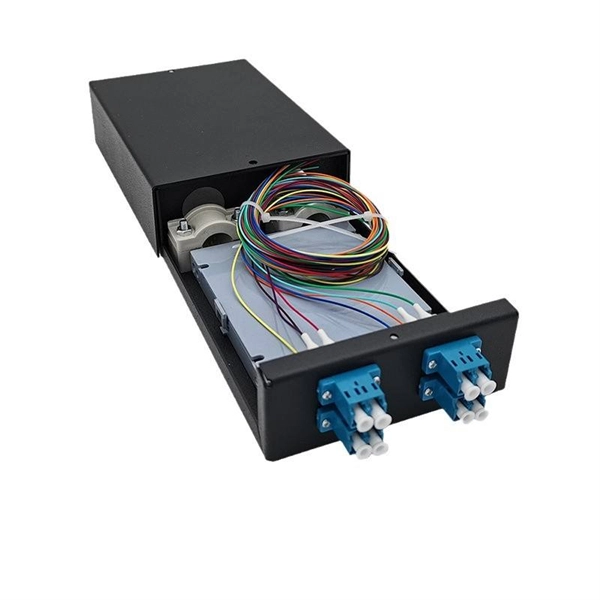
Used in applications ranging from residential FTTH (Fiber to the Home) to large-scale industrial telecom networks, splice trays vary in design, capacity, and price depending on functionality and environment. Modern telecommunications depend on ftth cable tray as basic building blocks for fast data transfer over great distances. These devices and systems use light to transport data and provide better dependability and bandwidth than conventional copper connections. They are indispensable in many. Optical fiber cable trays are essential components in modern electrical and telecommunications infrastructure. Used across data centers, industrial facilities, commercial buildings, and telecom networks, these trays provide structured, secure, and organized pathways for fiber optic cables. They include the following: Fiber reinforced cable trays have superior strength and, at the same time, are lightweight. This comes as a result of the fiber materials that are reinforced with plastics, which are also known as FRP. Main cost drivers include cable grade (indoor vs outdoor, armoured), distance, and labor for trenching, splicing, and termination. These structures, typically made from materials such as steel, aluminum, or fiberglass, are designed to support and protect cables, wires, and. In the realm of electrical equipment and supplies, fiber optic cable management trays play a crucial role in ensuring organized and efficient cable management.
[PDF]
To maintain support of cables at changes of elevation or direction of a tray, a large number of specialized cable tray fittings are made compatible with each style and manufacturer.OverviewIn the of buildings, a cable tray system is used to support insulated used for power distribution, control, and communication. Cable trays are used as an alternative to open wiring or. Several types of tray are used in different applications. A solid-bottom tray provides the maximum protection to cables, but requires cutting the tray or using fittings to enter or exit cables. A deep, solid enclosure for cables i. Common cable trays are made of galvanized,, aluminum, or glass-fiber reinforced plastic. The material for a given application is chosen based on where it will be used. Galvanized tray may b.
[PDF]
Step-by-step on-site guide: learn how to plan, mark, support, and install cable trays correctly, from shop drawing approval to final checks. Whether you're building a commercial setup or upgrading an industrial plant, proper cable tray installation ensures neat wiring, safe access, and easy maintenance. But before you lay the first tray or clamp down a single cable, you need a solid plan. This guide breaks down the process step by step. This guide covers the critical steps, from selecting the right electrical cable tray and performing accurate cable fill. , is a welded wire-mesh cable management system made of high-strength steel wire. It is used to manage cables for light B manufactures its cable tray in a range of materials with a variety of finishes. The selection of material and finish is a function of the environment in wh tant in a wide range. Proper installation of cables in trays is critical for maintaining an efficient and safe electrical system. It ensures that all installation activities follow authorized plans, specifications, and standards. The objective is to ensure safety, quality and compliance during the. Welcome to our step-by-step guide on installing cable trays! In this video, we'll explore the different types of cable trays available and provide detailed instructions for their installation. Whether you're an experienced electrician or a DIY enthusiast, this video is perfect for you.
[PDF]