The 1915 Çanakkale Bridge (Turkish: 1915 Çanakkale Köprüsü) is a road suspension bridge in the province of Çanakkale in northwestern Turkey. Situated just south of the coastal towns of Lapseki and Gelibolu, the bridge spans the Dardanelles, about ten kilometres (six miles) south of the Sea of Marmara. The bridge is the longest suspension bridge in the world; with a main span of 2,023. CrossesLocale, Official name1915 Çanakkale KöprüsüDesignDesign and costThe bridge's tender project was designed by Turkey-based and by Denmark-headquartered and by Pyunghwa Engineering Consultants (PEC) in South Ko. Proposals for a bridge spanning the have existed since the 1990s. A bridge was proposed again in 2012 and went on to be placed in the Turkish government's future transportation projects lis. Some symbolic figures are associated with the bridge: • the number 1915 in the name,• the height of intersection point of main cable (318 m), • and the opening date (18 March),. • • 4 November 2020 at the at web site• at.
[PDF]
Because bus bars are conductors that carry large electrical currents to manufacturing equipment, they are often covered with bus ducts, making visual inspection difficult. In addition, bus ducts (bus ba.
[PDF]
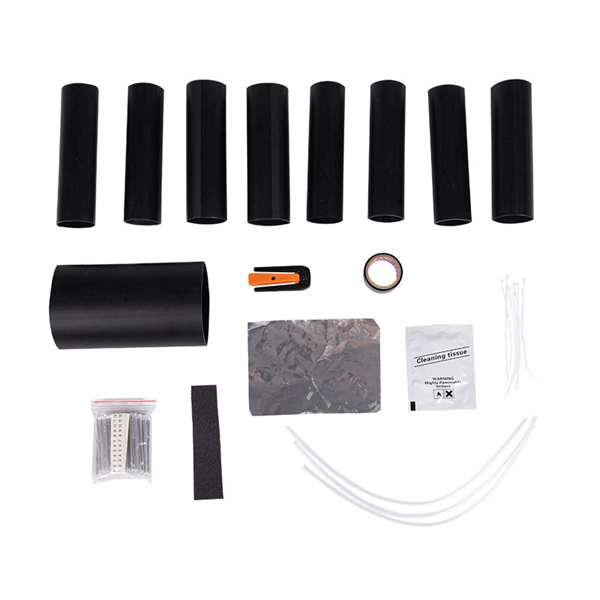
This high-performance Polarization Maintaining (PM) Fiber Patch Cord is engineered for precision-critical optical systems. Using Panda-type PM fibers and carefully aligned connectors, it ensures stable signal integrity even under rigorous environmental changes. Wavelengths covering altogether 360nm to 1800 nm - each fiber with an operational wavelength range of about 100-300 nm. Polarization-maintaining, single-mode fiber cable (PM fiber cable) with Gaussian intensity distribution and low-stress fiber connectors. Corning offers the broadest portfolio of PANDA PM fibers from wavelengths of 400-1550 nm and designs such as High NA and Flame Retardant coatings. These cables are available from stock and feature a high-quality polish, which leads to a typical return loss of 50 dB. Available in customized connector. Fibercore's industry leading polarization maintaining fiber (PM fiber), is designed for high performance interferometric and plarimetric sensors, integrated optics and communications.
[PDF]
The Channel Tunnel (French: Tunnel sous la Manche, sometimes referred to as the Chunnel) is a 50.46-kilometre (31.35-mile) railway tunnel beneath the English Channel that connects Folkestone in the United Kingdom with Coquelles in northern France. Opened in 1994, it remains the only fixed link between Great Britain and the European mainland. The tunnel has the longest underwater sec. Location ()StatusActiveStart, UK ()End, France ()HistoryIn 1802, Albert Mathieu-Favier, a French mining engineer, proposed a tunnel under the English Channel, with illumination from oil lamps, horse-drawn coaches, and an artificial island positioned mid-Channel for changing h. Site investigation undertaken in the 20 years before construction confirmed earlier speculations that a tunnel could be bored through a chalk stratum. The chalk marl is conducive to tunnelling, with impermeabi.
[PDF]
The Øresund Bridge or Öresund Bridge is a combined railway and motorway cable-stayed bridge across the Øresund strait between Denmark and Sweden. It is the second longest bridge in Europe and combines both roadway and railway in a single structure, consisting of international European route E20. Although technically more Swedish than Danish, since the longest stretch crosses Swedish waters, the iconic Øresundsbron links Denmark with Sweden. Even its official name is a merger of the two neighbours, combining the Danish 'Ø' and the Swedish word for bridge, bron. Opened in July 2000, the. Due to its geography and numerous islands, Denmark is a country where you can find some of the longest and most interesting bridges in Europe. Some of the notable crossings, like Øresund and Great Belt, combine bridges and tunnels, and are used for both road and rail traffic. Here is an overview of. The Øresund bridge is part of the Øresund fixed link - a bridge and tube tunnel route connecting the Danish capital Copenhagen with the city of Malmö in Sweden. It crosses the Øresund Strait, or the Sound. As early as the late 1800s, the idea of connecting Sweden and Denmark with a fixed link began to intrigue leading decision-makers. Due to the rapid technological development during the 20th century, ideas.
[PDF]