As of 2009, the telecom operators in China are exclusively Chinese: two fixed-line operators with nationwide licenses - China Telecom and China Unicom, three mobile carriers - China Telecom ( and ), China Mobile ( and ) and China Unicom ( and ). The State has control and majority ownership of all of them. Most of them are financed in. • is one of the largest telecommunication SOEs in China, including 31 semi-autonomou.
[PDF]
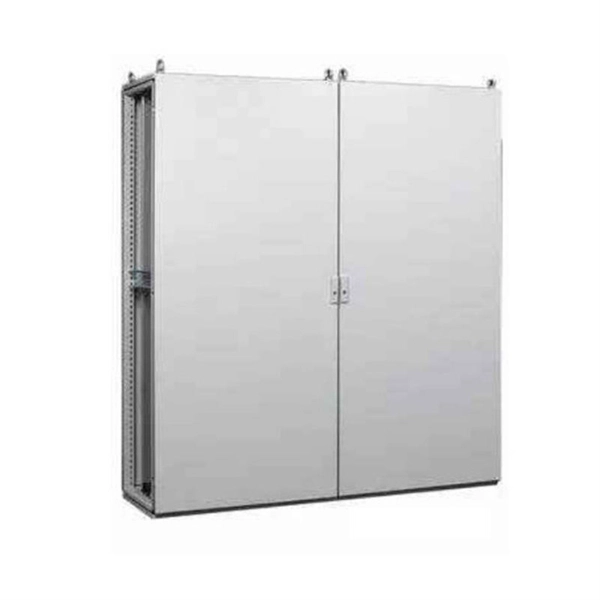
(a) A cable passing through an outside wall (s) of a distribution box shall be conducted either through a packing gland or an interlocked plug and receptacle. (b) Short-circuit protection shall be provided for each branch circuit connected to a distribution box. This content is from the eCFR and is authoritative but unofficial. Displaying title 30, up to date as of 5/01/2026. Choosing an item from citations and headings will bring you directly to the content. Choosing an item from full text search results will bring you. Working in potentially explosive environments means every component of your electrical system becomes a potential spark that could ignite disaster. It's not just about compliance - it's about creating intrinsically safe systems where cable management and enclosure installation don't just meet. Flameproof enclosure (Ex d IIB+H2), which can be used as feed distribution equipment in control and distribution system (such as distribution box, switch box of main circuit, control box, terminal box or motor starting box etc. ) ·Enclosure: stainless steel. What Is An Explosion Proof Box or Enclosure? They are a cast aluminum or iron box that can withstand a heavy-duty explosion.
[PDF]
Cold joints occur when there's an unintended interruption in the concrete pouring process. This results in weak seams where the two layers fail to chemically bond. Unlike construction joints, which are reinforced and planned, cold joints are structural defects that require immediate. A cold joint in concrete construction is a plane of weakness that forms when new, wet concrete is poured against concrete that has already begun to harden. They can be a real pain, potentially leading to structural issues down the line. Time to break down the details. The term "cold" is used because the two concrete layers are not bonded properly, which can result in a weakened. Few defects pose a more immediate and insidious threat to the long-term performance and intended load-transfer characteristics of a structure than cold joints in concrete columns. While often dismissed as purely aesthetic blemishes, a cold joint is, fundamentally, a failure of integration—a plane. Cold joint concrete is a common problem in the construction world. It's important for construction professionals to understand what causes cold joints and how to manage them effectively. This article takes a closer look.
[PDF]