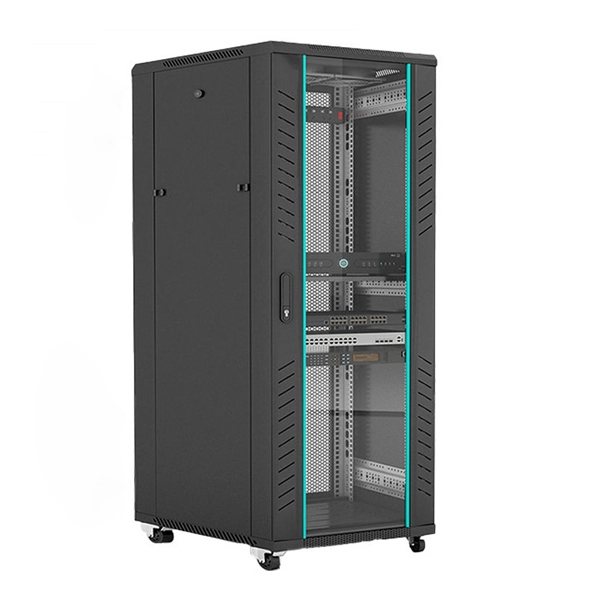
TRAX hot aisle / cold aisle data center curtains are the industry leading low cost containment solutions. Increase cooling efficiency while measurably lowering energy costs with data center containment solutions by TRAX. Click the button bellow to request a quote or call. Our aisle containment systems are designed to optimize energy use and enhance airflow management in data centers, both new and existing. Cool Shield™ containment offers state-of-the-art hot and cold aisle containment solutions designed to maximize data center efficiency while significantly reducing. Enhance cooling efficiency and reduce energy costs with aisle containment solutions from Server Racks Online. Designed for data centers and IT environments, our hot aisle and cold aisle containment systems help isolate airflow, optimize temperature control, and protect critical equipment. Why choose. Coolgenic cold aisle containment is a leading containment system designed and manufactured solely by Cross-Guard to aid server cooling within the Data Centre and IT industries. It offers superior airflow management,lower the data center energy demands and save on energy costs, also can provide a safe and.
[PDF]
Passive media components such as cables, cable splices, and connectors cause attenuation. Although attenuation is significantly lower for optical fiber than for other media, it still occurs in both multimode and single-mode transmissions. Two fundamental mechanisms cause attenuation inside the fiber itself: absorption and scattering. These are intrinsic to the glass, meaning they exist even in a perfectly manufactured, perfectly installed fiber. Scattering is the bigger factor at the wavelengths most networks use. The silica glass. Optical attenuation is the gradual loss of flux (light intensity) as an optical signal travels through a fiber. Measured in decibels (dB), it's the logarithmic ratio of the output power to the input power. Every network has a "loss budget". F iber optic networks rely on the efficient transmission of light signals to deliver high-speed data over long distances. However, various factors can cause signal degradation, leading to performance issues and reduced network reliability. You may see slower speeds and less steady connections when signal loss goes up. Things like impurities in the fiber core and reflections at the core-cladding edge cause this drop. This can be due to a variety of factors: scattering and absorption, intrinsic. Signal attenuation in fiber optics is a key concept in telecommunications. It affects how far a signal can travel without losing.
[PDF]
Typical rates range from $75 to $180 per hour per technician, with on-site time often dominating the total. Hidden costs include traffic control, trench restoration, and post-repair verification testing. Prices for fiber optic repair vary by issue type, location, and required work. This guide lays out cost expectations, with clear low–average–high estimates and regional nuances. Includes fusion/splice, testing, and basic materials. This guide provides practical cost ranges in USD with. In the United States, fiber optic repair typically costs a few hundred to several thousand dollars, depending on the scope of the fault, distance of the fiber run, and required components. The cost to fix a fiber line often hinges on the fault type, distance, and response time, with price ranges reflecting differing crews and materials.
[PDF]
Optical fiber cold splice technology is based on the use of mechanical connectors to join two fiber-optic cables. These connectors are designed to align and join the fibers together in a precise and secure manner. This guide covers everything: what fiber optic pigtails are, how they differ from patch cords, which connector and polish type to specify, how to choose between mechanical and fusion splicing, and the real-world applications where pigtails are the right call. The connectors used in cold. Most fibers can be mechanically stripped without the aid of chemicals or heat. The recommended cleaning solvent for connectors and tools is isopropyl alcohol (reagent grade, 99% or beter). Do not use acetone for cleaning. They directly affect insertion loss, return loss, reliability, and long-term network stability. In this guide, we break down the most common optical fiber. In this beginner-friendly guide, we'll explain what it is, why the “APC” matters, the different types you can buy, how to select the right model, and how to install and test it correctly. What is an SC/APC Fiber Optic Adapter? An SC/APC fiber optic adapter is a passive mechanical interface used to. FASTConnect® field-installable connectors are factory pre-polished connectors that completely eliminate the need for hand polishing in the field. Proven mechanical splice technology ensuring precision fiber alignment, a factory pre-cleaved fiber stub and a proprietary index-matching gel combine to.
[PDF]
As of 2009, the telecom operators in China are exclusively Chinese: two fixed-line operators with nationwide licenses - China Telecom and China Unicom, three mobile carriers - China Telecom ( and ), China Mobile ( and ) and China Unicom ( and ). The State has control and majority ownership of all of them. Most of them are financed in. • is one of the largest telecommunication SOEs in China, including 31 semi-autonomou.
[PDF]
Condensation happens when warm, humid air touches a cooler surface and turns into water droplets. While this might not seem like a big deal, inside electrical enclosures, it can cause real trouble—like short circuits, rust, and equipment failure. Operating a sub-zero warehouse or refrigerated distribution centre presents a constant battle against the laws of physics. While the focus is often on maintaining the thermal envelope, the electrical infrastructure within these zones is frequently at risk from internal moisture. This is especially common in places with high. Imagine opening an electrical distribution box only to find water droplets clinging to your expensive components like dew on morning grass. That's condensation—not just an annoying surprise, but a silent destroyer lurking in control cabinets worldwide. You prevent frost by blocking moisture with a continuous vapor barrier on the warm side of the insulation, sealing every joint, seam, and penetration to keep air out. The most. Simply put, you need ways to manage condensation so it doesn't ruin the devices inside of your electrical box. Fortunately, that's not always a painful process. A handful of tips and tricks can help you dramatically lower condensation inside of an electrical box, and many of them stand to save you.
[PDF]