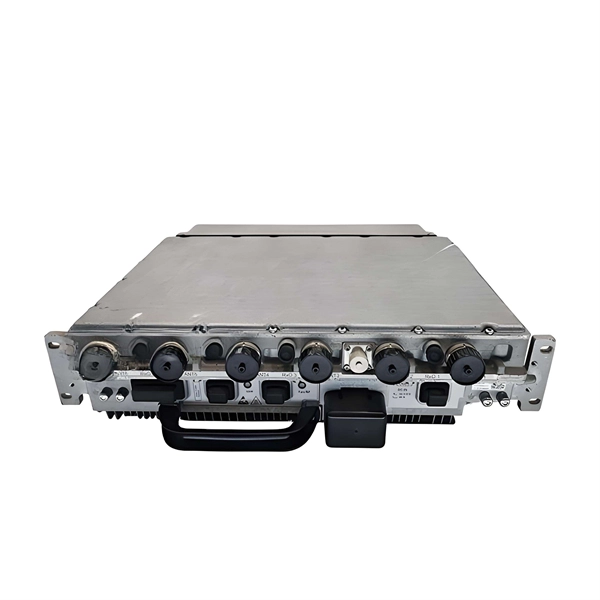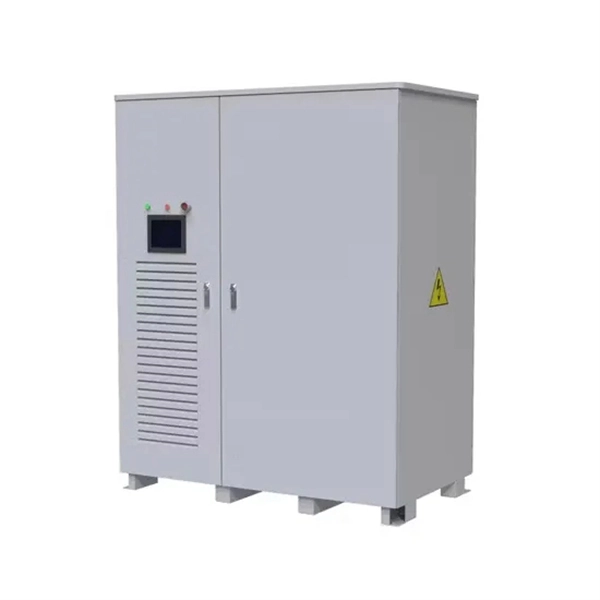
Panel Tech Systems is Kenya's leading manufacturer and distributor of electrical switchgear, low voltage panels, VFD drives, and industrial automation solutions. ISO-certified, IEC-compliant panels powering hospitals, schools, industries, and infrastructure across East Africa. A distribution board is a part of an electrical supply system that separates an electrical power feed into subsidiary circuits while providing a circuit breaker for each circuit in a common enclosure. Ensure safe and efficient power distribution with this 10-Way TPN Distribution Board, designed. All payments must be confirmed and cleared before goods are dispatched. No products in the cart. Electrical professionals use distribution boards to divide the incoming electrical supply into subsidiary circuits while providing. This wall mount enclosure (IP65/IP66) is designed to accommodate various types of switchboard and control gear assemblies to suit a variety of electrical installations in commercial and light industrial premises. They are designed for outdoor applications up to IP66. Supply include: Enclosure and. Electrical boxes and enclosures house electrical connections, devices, and equipment while providing protection against environmental hazards and preventing accidental contact with energized components. These essential components come in various configurations to meet diverse installation.
[PDF]
As shown in the figure below, the main cable consists of three conductor wires extending from the top of the motor flat lead extension to the wellhead banded to the production tubing. The ESP cable carries current (amperage) from the motor controller at the surface down to the motor. CAVALCADE™ ESP power cable meets the high-quality standards required for any oil and gas industry specification–even the most challenging unconventional applications–to deliver the electrical requirements of your ESP and to extend system run life. Get cable built with solid copper conductors. Typically, it is banded or clamped to the production tubing from below the wellhead to the ESP unit because it is not designed to support its own weight. It is a specially constructed three-phase power. Levare is one of few artificial lift equipment providers manufacturing the complete ESP system including power cable. The total facilities capacity is approximately 10,000 kilometers (over 6,200 miles) of power and motor lead extension (MLE) cables annually. It is a specially constructed three-phase power cable designed. When performing well interventions, the choice of a suitable cable is critical to ensure well control is maintained while deploying wireline through pressure control equipment (PCE). Depending on the well conditions, many considerations should be taken into account for choosing the best cable.
[PDF]
The Channel Tunnel (French: Tunnel sous la Manche, sometimes referred to as the Chunnel) is a 50.46-kilometre (31.35-mile) railway tunnel beneath the English Channel that connects Folkestone in the United Kingdom with Coquelles in northern France. Opened in 1994, it remains the only fixed link between Great Britain and the European mainland. The tunnel has the longest underwater sec. Location ()StatusActiveStart, UK ()End, France ()HistoryIn 1802, Albert Mathieu-Favier, a French mining engineer, proposed a tunnel under the English Channel, with illumination from oil lamps, horse-drawn coaches, and an artificial island positioned mid-Channel for changing h. Site investigation undertaken in the 20 years before construction confirmed earlier speculations that a tunnel could be bored through a chalk stratum. The chalk marl is conducive to tunnelling, with impermeabi.
[PDF]
The Øresund Bridge or Öresund Bridge is a combined railway and motorway cable-stayed bridge across the Øresund strait between Denmark and Sweden. It is the second longest bridge in Europe and combines both roadway and railway in a single structure, consisting of international European route E20. Although technically more Swedish than Danish, since the longest stretch crosses Swedish waters, the iconic Øresundsbron links Denmark with Sweden. Even its official name is a merger of the two neighbours, combining the Danish 'Ø' and the Swedish word for bridge, bron. Opened in July 2000, the. Due to its geography and numerous islands, Denmark is a country where you can find some of the longest and most interesting bridges in Europe. Some of the notable crossings, like Øresund and Great Belt, combine bridges and tunnels, and are used for both road and rail traffic. Here is an overview of. The Øresund bridge is part of the Øresund fixed link - a bridge and tube tunnel route connecting the Danish capital Copenhagen with the city of Malmö in Sweden. It crosses the Øresund Strait, or the Sound. As early as the late 1800s, the idea of connecting Sweden and Denmark with a fixed link began to intrigue leading decision-makers. Due to the rapid technological development during the 20th century, ideas.
[PDF]
Due to the Qatar diplomatic crisis and Bahrain's siding with Saudi Arabia, plans to construct the bridge had stalled. That crisis was resolved in 2021 with the re-establishment of diplomatic trade and transportation ties.CrossesLocale and Maintained byQatar and Bahrain Causeway FoundationTotal length40 km (25 mi)SummaryThe Qatar Bahrain Causeway (also referred to as the Qatar Bahrain Friendship Bridge) is a planned between the two of and. It was also expected that a service would be establishe. It was announced on 13 December 2008 that construction would start in early 2009, and would cost approximately 2.3 billion to complete. As of June 2015, construction had not started, and the Qatar–Bahr. The link between the two countries would be approximately 40 km (25 mi) in length, and support both a road and a railway. The link was expected to consist of a number of bridges and be a natural extension of the. The project was reportedly approved for construction on 28 February 2005, to link Bahrain near to northwest Qatar near as the longest fixed link in the world. A formal agreement between the two countries w.
[PDF]
Sidi M'Cid Bridge is a 164-metre-long (538 ft) suspension bridge across the Rhumel River in Constantine, Algeria. It was opened to traffic in April 1912 and until 1929 was the highest bridge in the world at 175 m (574 ft). The bridge was designed by French engineer Ferdinand Arnodin and links the Casbah to Sidi M'Cid hill. The bridge underwent restoration in 2000 when 12 of its cables wer. HistoryConstantine was an important city of 50,000 people when Émile Morinaud took over as the mayor and member. • • • •.
[PDF]
These bridges rely on strong cables, anchored at both ends, to support the deck and distribute weight efficiently. But how exactly are they built? This article provides a detailed step-by-step guide on the construction process of a suspension bridge. Planning and. Suspension bridges are marvels of modern engineering, capable of spanning vast distances while supporting heavy loads. They are often used to cross large bodies of water, deep valleys, or busy urban areas. This project requires careful planning and a serious approach to engineering principles to ensure safety and stability. They are also among the most expensive bridges to construct. Though suspension bridges can be made strong. San Francisco's Golden Gate Bridge stands as a classic example of a suspension bridge. Gabrielle Lurie/The San Francisco Chronicle via Getty Images As the name implies, suspension bridges, like the Golden Gate Bridge or Brooklyn Bridge, suspend the roadway by cables, ropes or chains from two tall. In this article, we'll dive deep into the story of suspension bridges—how they work, how they've evolved, and why they remain essential to the way we connect our world today and into the future. The idea of suspending a pathway with tensioned cables is far from modern—it reaches deep into human.
[PDF]