This manual is valid for the Meter Connection Box from hardware version A and firmware version 1. This manual is intended for installers. DANGER! DANGER indicates a hazardous situation which, if not avoided, will result in death or serious injury. WARNING!. ith solar inverters, solar string monitor-ing systems provide all the information needed for transparent monitoring of the enerated power. The current level of each string is collected by the string monitoring system, which is installed inside of combiner boxes. Those combiner boxes are first. Connecting solar panels to monitoring systems is essential for optimizing the performance and efficiency of solar installations. Identify the type of monitoring system needed, 2. Regularly update and manage. t de functie v ge sense cable for starter battery. y isolation (available separately). Operated by control on System Panel. The combiner box monitoring system provides monitoring and management for each device in a solar power generation system. It can monitor the status of surge protectors and circuit breakers without an external power supply. It provides features required to maintain loads such as: Select a topic to jump to that page.
[PDF]
This paper builds a network platform based on wireless transmission technology to realize the intelligent monitoring of equipment operation status and energy efficiency monitoring in the current oilfield well and inter station well pads. Accurate prediction of electricity consumption in crude oil pipeline transportation is of significant importance for optimizing energy utilization, and controlling pipeline transportation costs. Currently, traditional machine learning algorithms exhibit several limitations in predicting electricity. Since monitoring systems in long-distance infrastructures may benefit from solutions based on multi-hop communication, we consider oil pipeline infrastructures in the Saudi Arabian desert as a case study. An analytical model is considered for estimating the above-stated parameters and evaluating. ABB's Control Room offering includes a comprehensive range of solutions designed to optimize the operator workspace for critical 24/7 processes across various industries. The control room is considered one of the most critical areas in any facility, impacting daily decision-making and overall. In an era where energy is not just a commodity but a cornerstone of modern enterprise, an EMS (Energy Management System) power system heralds a revolution in how organizations engage with their energy resources.
[PDF]
The VIAVI ONMSi Remote Fiber Test and Monitoring System provides fiber network visibility that scales for both PON and point-to-point networks. ONMSi provides network visibility across the network core, metro, and access PON up to the premises of your residential, business or wireless. Cable tray is a raceway system designed to protect and route fiber optic patch cords, multi-fiber cable assemblies and intrafacility fiber cable to and from fiber splice enclosures, fiber distribution frames and fiber optic terminal devices AZE offers a variety of styles, materials and finishes. Our Fiber Cable Tray System is a comprehensive raceway solution for data center, enterprise, central office, and mobile switching center applications. Designed to route and protect fiber optic and high-performance copper cabling to and from network cabinets, distribution frames, and other terminal. From fiber raceways for protecting sensitive fiber optic cables to wire mesh cable trays for quick, versatile installations. Available in various sizes with complete accessories. Need Help with a Product You Own? Decide on the placement of racks and other equipment requiring power or data. Plan how data and power cables will be.
[PDF]
The evolution of fiber optic transmission systems has seen advancements such as dense wavelength division multiplexing (DWDM), coherent transmission technology, modulation format improvements, increased transmission speeds (e., 100 Gbps, 400 Gbps), and the adoption of. The winding journey of fiber optics is a story of persistent progress. From Daniel Colladon's 1841 demonstration of light guidance in water to recent advances empowering multi-terabit infrastructure, researchers continuously pushed the boundaries of optical communication. Early steps like total. Created by the Fiber Optic Association as an educational project to help document the history of the development of fiber optics for communications. Dates, of course, are often approximate, as putting a firm date on the introduction of a new technology is often impossible! the most important. Discover the latest developments in fiber-optic communications with the newest edition of this leading textbook In the newly revised fifth edition of Fiber-Optic Communication Systems, accomplished researcher and author, Dr. Agrawal, delivers brand-new updates and developments in the. The evolution of fiber optic networks has been a steady and methodical journey of technological advancements that have revolutionized the way we communicate and transfer data. From its inception as a theoretical concept in the 1960s, fiber optics has undergone significant developments, resulting in.
[PDF]
Figure 1 shows the OCS architecture containing the soliton microcomb, SOAs, AWGs in the switch and AWGRs to route the data across many racks (cf. Methods). This architecture allows further paralle.
[PDF]
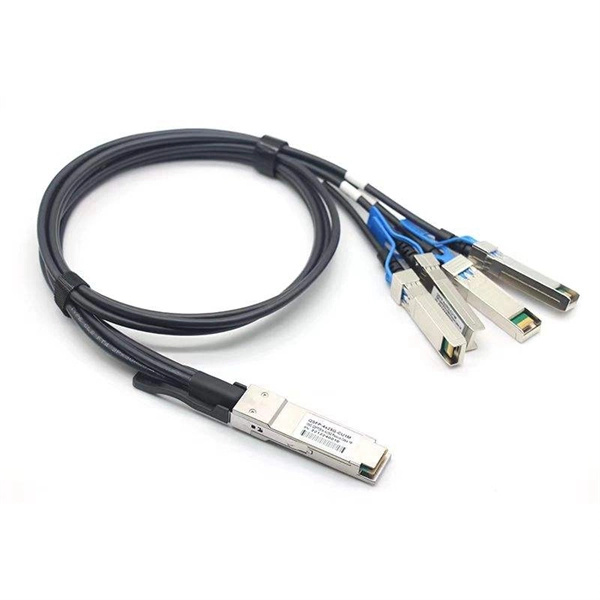
It performs error detection and alarm monitoring, serving as an essential tool for bit error testing in R&D and production of optical modules/ devices. Bit Error Ratio Tester is an instrument used to test and analyze bit error ratio in digital transmission systems, fiber optic communication systems, and digital microwave communication systems. Dimension Technology's BERT800 bit error tester series offers a comprehensive solution for testing and verifying high-speed optical transceiver modules. OPTELLENT is a provider of broadband test and measurement solutions for communications. The Company's test & measurement solutions are used in product development, manufacturing. As transmission rates continue to accelerate, accurately measuring bit error rates in optical modules is crucial to ensure reliable performance. There are three interchangeable slot boards which include QSFP, SFP+ and SFP ports separately. QSFP, SFP+ and SFP ports follow QSFP MSA, SFP+ MSA and SFP MSA. The user interface allows you to individually monitor bit error rate, error count and timer by connecting to PC via USB cable. In high-speed digital communication systems, even the smallest bit-level error can compromise performance, reduce efficiency, or lead to costly rework.
[PDF]
Provides accurate and cost-effective testing methods for the optoelectronic signal testingand anomaly simulation of high-speed optical transceiver modules. The OptoBERT™ OPB04X10 is the industry's most compact, cost-effective, easy-to-use 4-channel 10Gbps electrical bit-error-ratio tester (BERT). PBT3058 is a high-performance Bit Error Ratio Tester which can be used for physical layer characterization and consistency test of high-speed serial signal. 6TBASE/CEI-224G standards and also supports PCIe rate testing ranges through extended rate. Transmitter net measurement:. Our portable and stationary provers ensure accuracy and industry compliance for flow meters on a variety of in the field applications. Available in custom configurations and max flow rates, each prover is designed to eliminate the many prover problems of the past including our Unidirectional. In high-speed digital communication systems, even the smallest bit-level error can compromise performance, reduce efficiency, or lead to costly rework. That's why Physical Layer Tech offers precision-engineered Bit Error Rate Testers (BERTs) designed to verify data transmission accuracy and ensure. Whether you are looking for the smallest handheld 100G bit error rate tester in the world for your field job, or perhaps your needs take you into the lab, VIAVI has you covered with our accurate and easy-to-use BERT equipment for any use case. · Use control board and replaceable.
[PDF]
Distributed Acoustic Sensing (DAS) systems detect strain changes and vibrations along optical fibers. This highly sensitive technology is used for monitoring critical infrastructure such as power cables, pipelines, or railroad tracks. Such a system allows acoustic frequency strain signals to be detected over large distances and in harsh environments. The fiber optic cable functions as a distributed acoustic. Distributed Acoustic Sensing (DAS) is a technology that enables continuous, real-time measurements along the entire length of a fiber optic cable. Unlike traditional sensors that rely on discrete sensors measuring at pre-determined points, distributed sensing utilizes the optical fibre. The optical. Laser stability, narrow linewidth, and low phase noise define sensitivity, range, and long-term reliability of DAS systems. In subsea sensing, everything depends on the laser. These innovative systems provide significant advantages over traditional methods in. Below is a head-to-head comparison of where fiber optic sensing is headed and how it will change the way monitoring is designed, deployed, and operated.
[PDF]
This paper aims to study the design, simulation, and optimization of low-loss Y-branch passive optical splitters up to 64 output ports for telecommunication applications. For a waveguide channel profile, the standard material silica-on-silicon is used. Two important technologies for optical layer monitoring are Optical Performance Monitoring (OPM) and Optical Power Detection (OPD). Although they aim to maintain network health, they differ significantly in scope, technique, and deployment. This article delves into these differences, equipping. Optical Performance Monitoring (OPM) is considered a necessity over an optical network to enable sensibility of traffic line status and attain outstanding Quality-of-Service (QoS). The Y-splitters are designed and simulated at. Passive optical networks (PONs) are the network architecture of choice for residential fiber deployments. A PON is designed specifically to be cost-effective for delivering high data-rates to large customer populations. signals and various components of OPM functionalities are indispensable robust network operation and plays a key role flexibility and improve overall. Optical performance monitoring (OPM) is used for managing high capacity dense wavelength-division multiplexing (DWDM) optical transmission and switching systems in Next Generation Networks (NGN). OPM involves assessing the quality of data channel by measuring its optical characteristics without.
[PDF]
Used in applications ranging from residential FTTH (Fiber to the Home) to large-scale industrial telecom networks, splice trays vary in design, capacity, and price depending on functionality and environment. Modern telecommunications depend on ftth cable tray as basic building blocks for fast data transfer over great distances. These devices and systems use light to transport data and provide better dependability and bandwidth than conventional copper connections. They are indispensable in many. Optical fiber cable trays are essential components in modern electrical and telecommunications infrastructure. Used across data centers, industrial facilities, commercial buildings, and telecom networks, these trays provide structured, secure, and organized pathways for fiber optic cables. They include the following: Fiber reinforced cable trays have superior strength and, at the same time, are lightweight. This comes as a result of the fiber materials that are reinforced with plastics, which are also known as FRP. Main cost drivers include cable grade (indoor vs outdoor, armoured), distance, and labor for trenching, splicing, and termination. These structures, typically made from materials such as steel, aluminum, or fiberglass, are designed to support and protect cables, wires, and. In the realm of electrical equipment and supplies, fiber optic cable management trays play a crucial role in ensuring organized and efficient cable management.
[PDF]