This research report provides a comprehensive analysis of the best-selling spectrometers used for metal analysis, covering market trends, leading technologies, and key product offerings for 2025 and beyond. Like its predecessors, this tenth-generation SPECTROMAXx (LMX10) furnishes outstanding speed. Users get ultrafast information, and can react rapidly to changing process conditions. It also provides drastically reduced cost of ownership — with lower consumables plus advanced diagnostics and easy. The “Spectromaxx” optical emission spectrometer is used for the analysis of Fe-, Al- and Cu-based alloys, covering 20 methods, 45 elements and different adapters for various sample geometries. Analyzing with accuracy and precision from trace to percent element concentration levels, the reliability of our. The NEW PG SPARK OES CCD ANALYSER from PG INSTRUMENTS LIMITED is designed to maximise productivity with reliable metals analysis Iron and steels, Non-ferrous metals and alloys. The system is very affordable with high reliable and quality. The PG Spark, with its small footprint, is truly a Table Top. ION is one of the smallest and lightest ultra-compact spark emission spectrometer for metal analysis available. The new generation of spark spectrometer Q2 ION elevates. Wavelength: 120 nm - 460 nm. usability, simplified reporting, and streamlined analysis times—saving you time in your lab.
[PDF]
Beer-Lambert law describes the relationship between the absorbance of light by a substance, the concentration of the substance, and the path length of the light through the sample. ² In spectrophotometry, this law plays a fundamental role in quantifying the concentration of a solute in. Spectrophotometry is a technique used to measure how much light a substance absorbs at different wavelengths. When light passes through a sample, the molecules in the sample absorb some of it, and the rest passes through. The basic principle is that each compound absorbs or transmits light over a certain range of wavelength. This measurement can. Spectrophotometry is a branch of electromagnetic spectroscopy concerned with the quantitative measurement of the reflection or transmission properties of a material as a function of wavelength. Spectrometers use light wavelengths to investigate the chemical composition of a sample. Atomic spectrometers use an analytical method by which one or several elements in unknown mixtures can be detected.
[PDF]
Natural gas pipeline leakage seriously endangers people's lives and properties, and there is an urgent need for on-site, rapid, and accurate locating the leakage point of the underground natural gas pipeline. He.
[PDF]
Our Spectrophotometer is known for its user-friendly interface, simple installation, rich design, and durable and dependable working. We provide a full range at competitive rates in the Papua New Guinea while adhering to stringent industry standards. Self ship it at cheapest rate! We're available 24/7 to help you! 5. 6-inch Touch ScreenThe 5. 6-inch color touch screen enable simple and effective human-computer interaction as well as clearly displaying test data. Unique FunctionsThe spectrophotometer is designed with outstanding and distinct. Market Forecast By Type (Optical spectrometer, Mass Spectrometer), By Applications (Chemical Industry, Environmental Factors Testing, Pharmaceuticals, Food & Beverages Biotechnology, Others) And Competitive Landscape Do you also provide customisation in the market study? Yes, we provide. Aditya Systems has established its reputation in the domain and run under the brand name of LADA. We are recognized among the best manufacturers of Spectrometer in Papua New Guinea and become a trusted platform to buy standardized solutions that give clients value for money. Our commitment to quality and innovation sets us apart.
[PDF]
Use a spectrometer, which measures the amount of visible light that is absorbed by a solution, to test the purity of copper. The copper can remain in its solid form during testing and the spectrometer will not contaminate the sample. Conducting a copper quality test helps ensure that the material meets the purity standards required for optimal function across these critical applications: Electrical Applications: Nothing matches copper's ability to conduct electricity efficiently. Minor contaminants can severely impact its. The purity of copper is measured by what percentage of copper is found in the substance. The purest copper is over 99. Each technique's critical detection limits, selectivity, complexity, and. This chapter comprehensively evaluates recent advances in analytical methods for detecting copper, including atomic spectrometry, molecular spectrophotometry, electrochemical sensors, voltammetry, and chromatography. Each method will be broken down into easy-to-follow steps, ensuring you gain the confidence to perform these tests yourself. Ready to dive in and. The Copper industry encompasses a vast range of applications, from pure grades like OFE (Oxygen-Free Electronic), OFC (Oxygen-Free Copper), and ETP (Electrolytic Tough Pitch) to high-alloy compositions such as Brass and Cupro-Nickel. The elemental analysis of Copper, whether for purity or alloy.
[PDF]
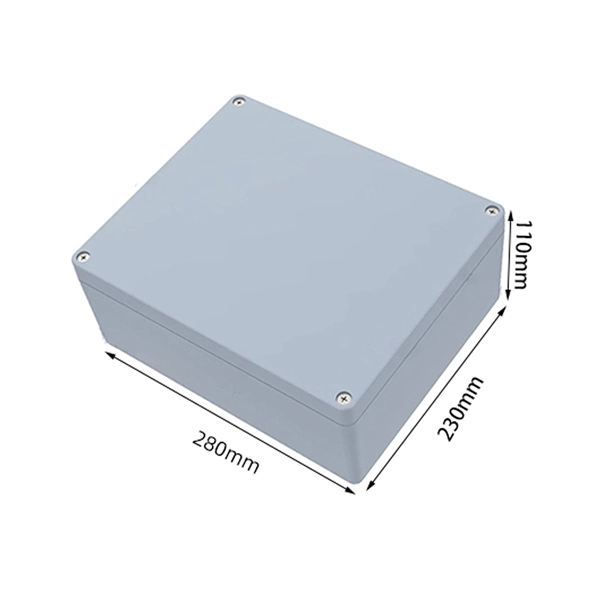
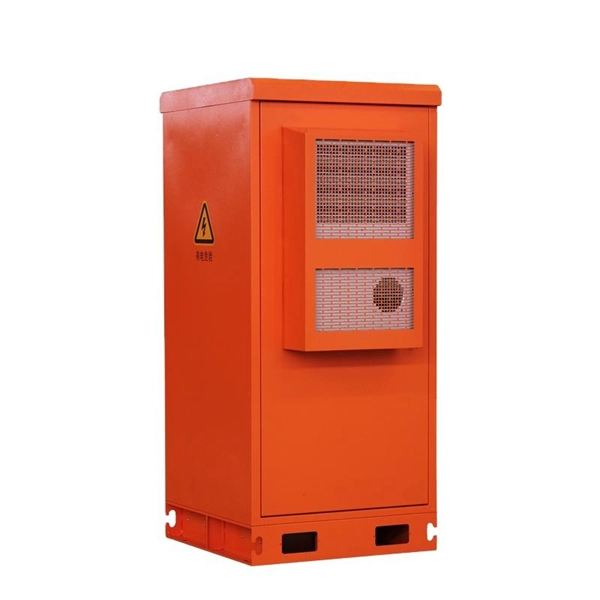
This document sets forth technical, installation and safety specifications for distribution boxes, switch boxes and cabinets. 4 KV Substation of the ratings indicated above. These Distribution Cabinets are to be outdoor type nd to be fabricated out of 2 mm GI sheet steel. The body of the boxes shall have sufficient re- enforcement with suitable size of channels keeping a provision for fixin andle conforming to general. Please share your feedback below and help us improve our content. Ministry of Trade and Industry, P/O Box 30366, Capital City, Lilongwe 3, Malawi. ©2025 Ministry of Industry and Trade of the Republic of Malawi, All rights reserved. It stipulates requirements for enclosure materials, installation dimensions, the mandatory "one equipment, one switch, one RCD" rule, mechanical structure, earthing systems. Each unit is UL-listed and equipped with advanced safety features, including circuit breakers and ground fault protection, making them ideal for both indoor and outdoor use. Compact and mobile units designed for temporary setups, perfect for construction sites and outdoor events. Features rugged. The 45FT Container is a high-capacity container solution designed for customers who require more internal length and increased storage volume compared to standard containers. Supplied by Cargo Steel Box in Malawi, this container is ideal for large-scale storage, transportation, and industrial. IEC 62262 IK10.
[PDF]
The main components include the light source, monochromator, sample holder, detector, and the output system, all of which work together to measure light across various wavelengths. The light source provides the energy necessary for the spectrometer to function. It typically emits light across a. While component types and devices vary from brand to brand, the core principle of how a spectrophotometer works stays largely the same. Listed below are some of the key components that make measuring transmittance possible. Figure 1: Components of a spectrophotometer: Light emitted from the source. Spectrometers are powerful instruments used to analyze the properties of light and matter, making them indispensable tools in various fields, including chemistry, physics, biology, and environmental science. They allow researchers and scientists to identify the composition of substances, measure. Wavelength selector is a component used to select and isolate the required wavelengths or range of wavelengths where the analyte is the only absorbing species (to obtain a certain wavelength or a narrow band of wavelengths). I will explain the principle as it applies to solid samples and solution samples separately.
[PDF]

The cost of a Raman spectrometer varies widely, from $10,000 for basic handheld models to $500,000 or more for high-performance Raman microscopes. Several factors contribute to this price range, including instrument type, laser excitation, resolution, sensitivity, and additional. Check each product page for other buying options. Price and other details may vary based on product size and color. Need help? Online shopping for Spectrometers - Spectrometry from a great selection at Industrial & Scientific Store. The Agilent Vaya handheld Raman spectrometer identifies raw materials through non-transparent and transparent containers, increasing throughput without increasing costs. From clear glass vials to brown paper sacks, Vaya offers best-in-class identification testing for the fastest possible release to. The Thermo Scientific™ TruScan™ RM Handheld Raman Analyzer delivers reliable material identity verification through sealed packaging in seconds, right at the point-of-need. These tools are designed to deliver accurate and reliable data for your research applications.
[PDF]
A spectrophotometer is a piece of spectroscopy equipment measures the amount of light absorbed by a sample. This measurement can be useful in many research applications: To identify materials by mapping molecular absorption profiles. To work out solute concentrations in solutions. Specifically, a UV-Visible Spectrometer measures the absorption or transmission of light in the ultraviolet (UV) and visible (Vis) regions of the electromagnetic. A spectrometer is a scientific instrument that analyzes light to reveal information about materials. It functions by separating light into its constituent wavelengths, much like a prism splits sunlight into a rainbow. This analytical capability makes spectrometers valuable tools across many fields. Spectrophotometry is an experimental technique that is used to measure the concentration of solutes in a specific solution by calculating the amount of light absorbed by those solutes. It is widely used in laboratories to analyze various substances, from liquids to gases. Here's a step-by-step guide on how to use a spectrophotometer. When you use spectrophotometry, you gain skills that help in many science fields. This guide makes spectroscopy simple by showing you how to use teaching tools and real experiments. The basic principle is that each compound absorbs or transmits light over a certain range of wavelength. This measurement can.
[PDF]
A spectrophotometer measures how much light a sample absorbs, helping you find chemical concentrations easily and accurately. Proper setup, calibration, and sample preparation are essential to get reliable and consistent results from your spectrophotometer. Widely used across scientific, medical, and industrial fields, it provides information about material composition and properties. This tool is essential for both. Spectrophotometry is an experimental technique that is used to measure the concentration of solutes in a specific solution by calculating the amount of light absorbed by those solutes. This technique is powerful because certain compounds will absorb different wavelengths of light at different. A spectrophotometer lets you measure how much light a sample absorbs at a certain wavelength. When you use spectrophotometry, you gain skills that help in many science fields. This guide makes spectroscopy simple by showing you how to use teaching tools and real experiments. In gen chem 1 we studied atomic line spectra, (section 6. We can therefore use spectra—the detailed patterns of colors—to figure out things like exactly.
[PDF]
AQ6374E Optical Spectrum Analyzer Getting Started Guide IM AQ6374E-02EN This manual. This guide explains the handling precautions, installation procedure, basic operations, and specifications of this instrument. 2nd Edition Thank you for purchasing the AQ6374E Optical Spectrum Analyzer. This is an instrument that can quickly measure optical characteristics of devices, such as LD, LED light sources, and optical amplifiers. It also has a touch screen and a zoom feature to make it easier to use. This user's. Page 2 Contact Us If you want to resolve a technical support issue or need to contact YOKOGAWA, please fill out the inquiry form on our website. com/contact/ PIM 103-06E. This remote control user's manual covers the AQ6374E. It describes the following and. Program Functions To ensure correct use, please read this manual thoroughly before beginning operation. To improve ease of use, it includes mouse-based user operation and a brand-new zoom function.
[PDF]
Press the Percent T/A selector to select Percent Transmittance or Percent Absorbance mode. Locate the wavelength dial beside the sample chamber and set it to the desired wavelength. Don gloves and wipe a cuvette with a lab wipe to clean it and remove any fingerprints. A spectrometer is an analytical tool used across various scientific disciplines to measure how a substance interacts with light. Specifically, a UV-Visible Spectrometer measures the absorption or transmission of light in the ultraviolet (UV) and visible (Vis) regions of the electromagnetic. How did a Spectrophotometer help scientists identify a species of bacteria that can clean up pollution? What is a Spectrophometer anyway, and how do you use one? In this video, Jayme Dyer answers these questions and provides practical Pro-Tips for how to use a Spectrophotometer in the lab. It consists of two parts: a spectrometer and a photometer. The spectrometer provides light at a specific wavelength. When you use spectrophotometry, you gain skills that help in many science fields. You will see that. Here's a step-by-step guide to using a spectrophotometer effectively. Blank Calibration: Fill a. Turn the Device on and Allow It to Warm Up 2. Clean and Prepare Containers and Control Samples 3. Standardize the Device According to Manufacturer's Directions 4. Choose Your Measurement Comparisons and Capture Data Spectrophotometric solutions simplify the science of quantifying chromatic data for.
[PDF]
Two general types of instruments exist: that use filters to isolate the light and light and that use to isolate the incident light and fluorescent light. Both types use the following scheme: the light from an excitation source passes through a filter or monochromator, and strikes the sample. A proportion of the incide.
[PDF]
Here we will first employ the rainbow trapping effect28,29,30,31 to develop an on-chip spectrometer system (e.g., refs. 32,33,34). As proof of concept, Fig. 1 illustrates the proposed system and the design o.
[PDF]