This article provides a comprehensive exploration of the technology, including its advantages, working principles, application range, and system parameters. Distributed Temperature Sensing (DTS) systems provide temperature information for accurate thermal monitoring, fire detection, and condition assessment by utilizing standard fiber optic cables. These fiber optic systems precisely measure the temperature profile of an asset by interpreting the. Fiber sensing technology has emerged as a game-changer in this domain, offering unparalleled capabilities for real-time monitoring and early detection of potential issues. It's become so useful that in many cases it has become mandatory to include fiber-sensing-based monitoring for new pipelines. A fiber optic temperature sensor is a temperature measurement device that uses optical fibers as the sensing medium. Unlike traditional electrical temperature sensors (e., thermocouples, RTDs), fiber optic sensors offer significant advantages such as immunity to electromagnetic interference. As the name suggests these sensors employs fiber optics technology to function. Advances in optoelectronics and associated signal processing have enabled the development of optical fibre distributed sensors with maximum ranges of several tens of kilometres. The DTS system's ability to offer continuous temperature measurements over tens of kilometers with high spatial and temperature resolution has.
[PDF]
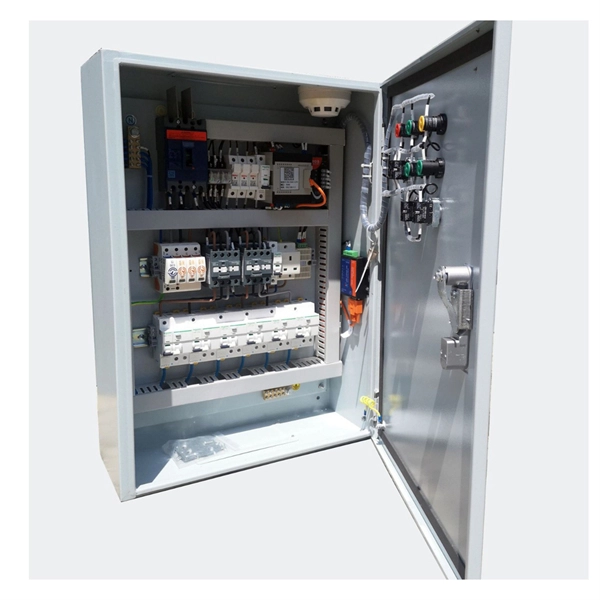
With various configurations and capacities available, Sys Rack PDUs cater to diverse needs, offering enhanced control and flexibility in power distribution for critical IT equipment. Pdus - Basic, Metered & Manageble Pdus. (For Power Distribution, Monitoring, Management Of The Server Racks) Pdus - Basic Pdus. 150x150x70mm Waterproof IP65 Terminal Junction Project Box Outdoor Electrical Enclosure Case. Sys Rack Power Distribution Unit (PDU) sold in Sri Lanka by Cubicoan Pvt Ltd is a crucial component in data centre and server room infrastructure, efficiently distributing power to multiple devices. Designed for reliability and scalability, it ensures seamless power management, surge protection. No. 11, 1st Cross Street, Borupana Road, Ratmalana. Tel: 011 7267267, Fax: 011 7267247 E-mail: sales. 5W B22 & E27 7W B22 & E27 9W B22 & E27 12W B22 & E27 15W B22 & E27 Rs. 00. We are reshaping the power landscape in Sri Lanka with enhanced generation, transmission and distribution services at a national and industry level. Distribution panels control electricity for a large area, like a warehouse, building or live event, and so require a certain level of safety and. Magline Switchboards Pvt Ltd is the leading manufacturer or low voltage power distribution panels. We have our own designing and manufacturing capability in house which.
[PDF]
Earth fault protection based on measured or calculated residual current values: If a breaker fails to be triggered by a tripping order, as detected by the non-extinction of the fault current, this backup protection sends a tripping order to the upstream or adjacent breakers. In electric power systems and industrial automation, ANSI Device Numbers can be used to identify equipment and devices in a system such as relays, circuit breakers, or instruments. The device numbers are enumerated in ANSI / IEEE Standard C37. 2 Standard for Electrical Power System Device Function. In North America protective relays are generally referred to by standard device numbers. ANSI IEEE Standard Device Numbers are below: (the more commonly used ones are in bold) 86T is a Lockout Relay for a. The ANSI standard device numbers ( As per ANSI/IEEE standard C37. 2) are used in the design of an electrical power system. The list of ANSI device numbers with their acronyms is as given below. Save my name, email. The protection and control devices in electrical equipment can be referred to by numbers, with appropriate suffix letters when necessary, according to the functions they perform. Even in those parts of the world where IEC standards are predominate, the use of ANSI numbering. There are two methods for indicating protection relay functions in common use. The functions are supplemented by letters where amplification of the function is required. The other is given in IEC 60617 and uses.
[PDF]
This guide covers the critical steps, from selecting the right electrical cable tray and performing accurate cable fill calculations to managing a safe cable pull through and ensuring all bonding and grounding requirements are met. Whether you're building a commercial setup or upgrading an industrial plant, proper cable tray installation ensures neat wiring, safe access, and easy maintenance. But before you lay the first tray or clamp down a single cable, you need a solid plan. This guide breaks down the process step by step. The use of ladder-type. Prohibited Areas: Cable trays cannot be used in hoistways or enclosed spaces and must remain accessible. Grounding: Metallic trays can serve as equipment grounding conductors (EGC) if they meet NEC requirements. Fill Limits: For power cables, the fill must not exceed 40% of the tray's. Proper installation of cables in trays is critical for maintaining an efficient and safe electrical system. This is why proper planning and execution are. Cable tray systems provide a safe, organized, and flexible method for supporting insulated conductors and cables in commercial and industrial electrical installations. When properly selected and installed, cable trays simplify routing, improve accessibility, and support future expansion while.
[PDF]
Basic — 1,000 ft single-mode run indoors with minimal termination: Cable $0. 00/ft, Permits $150, Accessories $100. Total ≈ $2,650–$3,100. 60/ft, Permits. Buyers typically pay for fiber optic cable by length, fiber type, and installation complexity. Main cost drivers include cable grade (indoor vs outdoor, armoured), distance, and labor for trenching, splicing, and termination. 50 per foot for the cable itself, while multimode fiber ranges from $0. Higher strand counts increase costs proportionally—a 12-strand fiber. A fiber optic cable is an advanced networking solution that transmits data over long distances at very high speeds using pulses of light. Ideal for telecommunications, data centres and networking applications, our fibre optic cables are available in single-mode and multimode. The Asia-Pacific fiber optic connectivity market is valued at approximately USD 18–22 billion in 2026, driven by hyperscale data center expansion and 5G network densification across China, India, and Southeast Asia. Data center interconnect and FTTx access networks together account for over 60% of. The average OM3 fibre cable price in Australia typically ranges between $0. 20 AUD per metre, depending on the jacket material, core count, and whether the cable is indoor-rated, outdoor-rated, or suitable for both. While OM3 was once a common choice for 10Gbps backbones, it's becoming.
[PDF]