Explore What are PoE Switches and their key benefits, simplifying network setups and powering devices with a Ethernet cable. Power over Ethernet (PoE) is a technology that allows network switches to transmit both power and data through an Ethernet cable simultaneously. The benefits of PoE switches have become more evident with the rapid expansion of network-connected devices. Hence, no need of extra power adapter and outlets. Using PoE network switches, businesses, and. Looking for a reliable PoE switch in Pakistan? Our Power over Ethernet (PoE) switches provide both data and power through a single network cable, making them ideal for CCTV IP cameras, VoIP phones, and other network devices. Simplify installation and reduce wiring costs with our high-quality PoE. PoE Network Switch: Powering Your Network with Efficiency In the world of networking, efficiency, reliability, and simplicity are key. As more and more devices become part of corporate, industrial, and residential networks, the need for solutions that can both manage data traffic and provide power. Wi-tec offers a range of networking solutions: Media Converters, PoE Switches, Fiber SFP Switches, Industrial Switches, UPS Switches, Injectors, Splitters, Extenders, and Wi-Fi Solutions. POE Network Switch There are 49 products.
[PDF]
The layer 2 switches collect the data from core switches, identify the type of data packet and the address of the access device. Selective routing and switching take place at the distribution layer. Those new distribution switches will have L3 redundant connections to the CORE switches running EIGRP so this will provide us high availability and load balacing. The connection between these distribution switches is going to be a L3 link (Cisco recommendation) in order to summarize our networks to. · Layer Positioning: The data link layer (Layer 2) of the OSI model, realizing local forwarding of data frames based on MAC addresses. · Core Task: Establishing direct interconnections between devices within a local area network to ensure efficient communication within the same network segment. ·. Layer 2 Switch is a form of Ethernet switch that switches packets by looking at their physical addresses (MAC addresses). These switches operate at the data-link layer (or layer 2) of the Open Systems Interconnection (OSI) reference model. At Layer 2, edge switches use media access control (MAC) addresses to manage traffic within a local area. The core layer is the backbone of the network. The distribution layer connects the access layer to the core layer. When designing a campus LAN, you may. Physical Layer - Physical layer of TCP/IP model is responsible for physical connectivity of two devices. It contains multiple input/output ports.
[PDF]
Download accurate government tenders for Industrial Switches. Get Industrial Switches bids information along with BOQ and short summary for all etenders & offline Tenders. In 2025 122 Industrial Switches tenders are published by various Tendering Authorities & Private companies. Identify right Bids opportunities to participate in Government tenders. Bid on readily available switches tenders with the best and most comprehensive tendering platform, since 2002. Tendering authorities and private companies release thousands of. Advance Search Refer Document. Tender For Indoor end termination joint kit LT 185Sqmm,BUSBAR CHAMBER TPN Type Al. Refer. Find live industry-specific tenders here! 677 eTenders for Wires, Insulations, Switches and Electrical Fittings, with new tenders added daily. Get tender alerts on relevant online tenders, and never miss an opportunity. Login now to find Wires, Insulations, Switches and Electrical Fittings sector. Latest Industrial Switch Government Tenders, 11 live tenders are available from Government, Public and private sector, online e-tender / e-Procurement list from various Government Department of. Get Industrial Grade Switches bid information.
[PDF]
Port aggregation can increase maximum throughput, and allow for network redundancy. It does this by splitting traffic across multiple ports instead of forcing clients to use a single uplink port on a switch. Note that these performance improvements will only occur when multiple clients are passing. Did you know that fixed broadband speeds in the United States now average over 150 Mbps? Many connections stall because of single-port limits. This leaves users stuck in the slow lane. That's where ethernet port aggregation comes in. It combines multiple ports into one link to boost speed and cut. An Aggregation or "Top-of-Rack" switch is designed to connect everything in a rack at high speeds, then have an even bigger pipe out to the rest of the network. The regular Aggregation switch is best used to connect all devices in a rack. Port aggregation allows you to group multiple physical ports into one unit. The following list details the basic. You can configure a mixed rate of link speeds for the aggregated Ethernet bundle. Link speeds of 10GbE, 40GbE, and 100GbE are supported. This is commonly done to provide increased bandwidth between the switches and redundancy in the event of one of the links failing. How Much Total Bandwidth is.
[PDF]
Port aggregation allows you to group multiple physical ports into one unit. Port aggregation is useful for implementing load balancing and provides a redundant link backup. By aggregating. All UniFi Switches support aggregation, except USW-Flex, USW-Flex-Mini and USW-Ultra. Port aggregation is not supported on most UniFi Gateways; it is only supported on the EFG, UXG Enterprise, UDM Pro, UDM SE and UDM Pro Max. Because of this, you should not aggregate two ports connected from a. In computer networking, link aggregation is the combining (aggregating) of multiple network connections in parallel by any of several methods. Link aggregation increases total bandwidth beyond what a single connection could sustain, and provides redundancy where all but one of the physical links. A Link Aggregation Group (LAG) optimizes the usage of switch ports by linking a group of ports to form a single, logical, higher-bandwidth link. Aggregating ports multiply the bandwidth and increase port flexibility for Sophos Switch. Network administrators typically use this technique to increase backbone capacity between switches or to support high-speed data pipelines for servers. By establishing a.
[PDF]
The generally accepted and code-compliant height for switches is typically 48 inches (4 feet) from the finished floor to the top of the switch box. This standard helps ensure accessibility and consistency across installations. While the National Electrical Code (NEC) doesn't specify a mandatory standard outlet height for most general-use receptacles, established industry best practices and accessibility laws provide clear guidance. The NEC (Article 210. 52) specifies where receptacles must be placed (spacing along walls, required. The commercial electrical code requires switches at 42 to 48 inches and receptacles at 18 inches above finished floor in most applications. This height is an ergonomic choice, aligning well with the average reach.
[PDF]
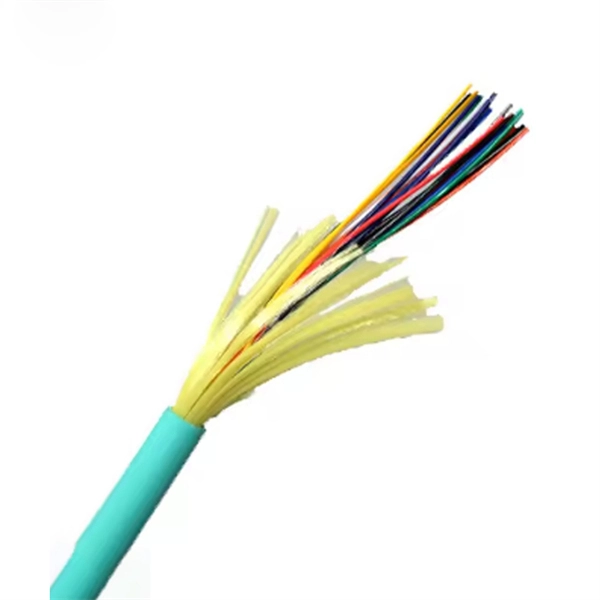
Routers and switches need to use optical modules and fiber patch cord to realize the interconnection between network devices. Usually, Gigabit switch can be matched with gigabit optical module and 10 Gigabit optical module. Optical switching represents a fundamental technological evolution, shifting data routing from the domain of electrons to the realm of photons, or light. This transition allows data to remain in its native optical form as it travels through fiber optic networks, eliminating the need for. Optical switches are devices that route light signals from one path to another without converting them into electrical signals first. They're a core component in fiber-optic networks, where data travels as pulses of light through glass fibers. Every time that light needs to change direction or jump. An SFP (Small Form-factor Pluggable) module is a hot-swappable transceiver used in switches, routers, servers, and telecom equipment to transmit data over fiber or copper connections. Different SFP modules support different: That's why selecting the correct model matters. Think of it as the “translator” for your network equipment, converting electrical signals into optical signals. Switch optical modules, which convert electrical signals to optical signals and vice – versa, and optical interfaces, which serve as the physical connection points, play a pivotal role in determining the speed, distance, and reliability of data transmission.
[PDF]
Variety of applications and services depend on data centers to provide the high reliability and availability of computing and storage resource at minimal costs. Along with the emerging of traffic boosting applic.
[PDF]
Fiber optic cables are, like their name suggests, a cable that uses light, rather than electricity to transmit information. They're made from silica glass fibers about the same width as a human hair, which all.
[PDF]