The main service provider in the Dominican Republic is Tricom. Aster is concentrated in Santo Domingo, but is expanding its service throughout the Dominican Republic.OverviewTelecommunications in the Dominican Republic include radio, television, fixed and mobile telephones, and the. • Radio stations: AM 146, FM 233, shortwave 14 (2013). A combination of state-owned and privately owned radio stations with more than 300 radio stations operating (2007). • Radios: 1.44 million (1997). • : 809, 829, and 849. • : +1 • Fixed lines: 1.14 million lines in use, 70th in the world (2022). • : • : 9.35 million users, 62nd in the world; 85.0% of the population (2021). • : 446,420 subscriptions, 72nd in the world; 4.4% of the population, 108th in the world (2012).
[PDF]

We're pleased to announce that FOA Jordan Center – Arrow for Engineering Solutions is now accredited to offer a new specialized certification in Fiber Splicing (CFOS/S). with the strongest fiber network in Jordan. Fibertech redefines connectivity in Jordan with its multipurpose fiber services, offering speeds ranging from 100 Mbps to 10 Gbps These services enable the aggregation of end-users' traffic through mutual communication services with service providers. With this addition, Arrow is officially authorized to deliver the following international Fiber Optic Association (FOA). Fibertech was established to build and operate Jordan's first open access wholesale fiber network providing mass consumer, highspeed networking services in close partnership with broadband retailers in Jordan. This has allowed Fibertech to provide the kind of high speed, secure, and reliable. Our founders were technicians in the field for many years. Seeing what the industry had to offer, they knew they could do better and formed Spligitty Fiber Optic Services, an organization specializing in fiber optic splicing and testing.
[PDF]
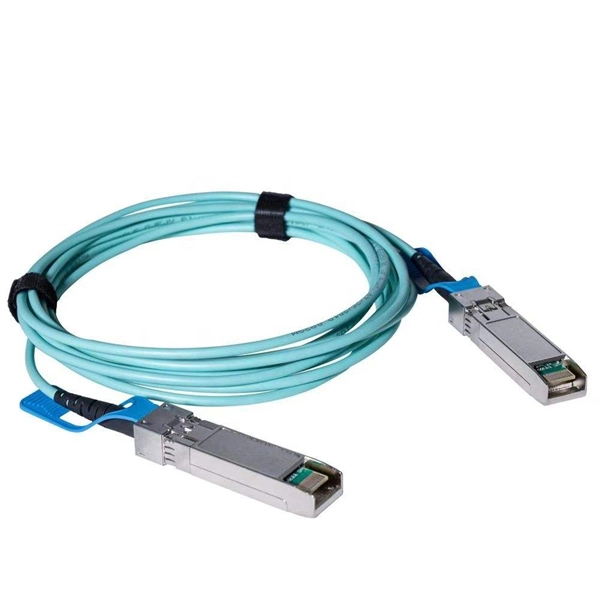
At the base of every telecommunication tower is the equipment shelter, often referred to as the tower's “brain. ” This structure houses the electronic equipment necessary for processing and managing the signals transmitted and received by the antennas. These towering structures form the backbone of mobile networks, enabling everything from voice calls to high-speed internet access, making digital connectivity possible. Despite their. Telecommunication towers—often called cell towers—are towering structures that form the backbone of wireless communication networks. These towers receive, amplify, and transmit radio signals, ensuring that mobile devices can make calls, send texts, and access the internet seamlessly across broad. The present-day tele-space is incomplete without the base stations as these constitute an important part of the modern-day scheme of wireless communications. Let's break down these essential elements: 1. Antenna: The Gateway to Wireless Communication The antennas positioned at. The terms "mast" and "tower" are often used interchangeably. However, in structural engineering terms, a tower is a self-supporting or cantilevered structure, while a mast is held up by stays or guy-wires. These towering structures may seem simple at first glance, but they are complex systems designed to facilitate the seamless.
[PDF]

Self-Supporting Towers are built out of tapering tower sections. For example, our 100 foot Self-Supporting tower is 42 inches wide at the base and tapers to 18 inches wide at the top. Radio masts and towers are typically tall structures designed to support antennas for telecommunications and broadcasting, including television. There are two main types: guyed and self-supporting structures. These towering structures form the backbone of mobile networks, enabling everything from voice calls to high-speed internet access, making digital connectivity possible. These towers are crucial for enabling wireless communication over large areas, including cellular phone services, data transmission, and radio. Monopoles Telecommunication Towers are single-pole steel structures designed to support wireless communication equipment and antennas for mobile networks. These sleek, space-efficient towers typically range from 15 to 45 metres in height and serve as the backbone of Australia's 3G, 4G, and 5G.
[PDF]