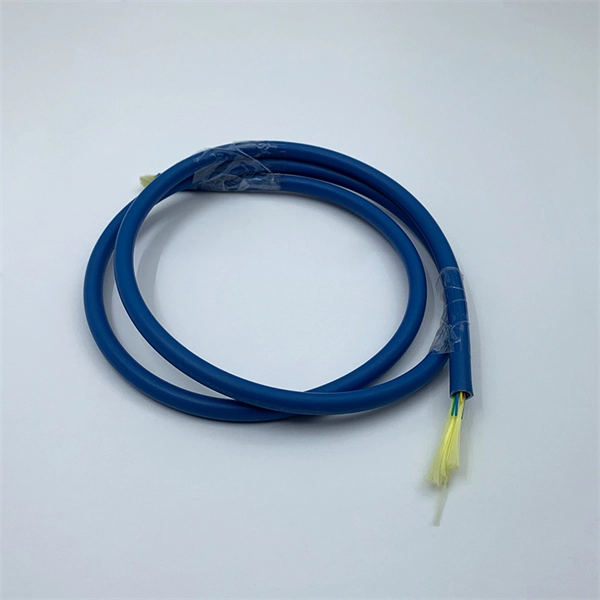
Instead of fusing one fiber at a time, mass fusion splicing can fuse up to all 12 fibers in one ribbon at once. Many of today's cables with high fiber count involve subunits of 12 fibers each that can be quickly ribbonized. Fiber optic joints or terminations are made two ways: 1) splices which create a permanent joint between the two fibers or 2) connectors that mate two fibers to create a temporary joint and/or connect the fiber to a piece of network gear. Either joining method must have three primary characteristics. Fiber optic splicing is the process of seamlessly joining two single Splicing has a lower optical loss and back-reflection than other terminations, making it the ideal choice for maintaining signal integrity and reliability in fiber optic networks. There are numerous use cases for fiber optic splicing. Through splicing, fiber optic technicians can extend the length of the fiber to make it long enough for use in a required cable run. As. To begin, the standard definition of splicing in optical fiber is joining two fiber optic cables together. The other, more common, method of joining fibers is called termination or connectorization. Splicing is most commonly used in the field but has application in cable assembly houses.
[PDF]
These OLT products facilitate users with high-speed data transfer, scalability, and reduced latency. In addition, there are also some drawbacks to these OLT products, such as high cost, difficult installation, and maintenance needs. Choosing between a small-capacity and a large-capacity OLT directly affects the scalability, cost, and overall efficiency of an FTTH deployment. This article compares small-capacity and large-capacity OLTs in terms of performance, design, and use cases, helping ISPs and network operators choose the. At the heart of a point-to-multi-point or passive optical network (PON) is the optical line terminal (OLT). Modern OLTs offer communication service providers (CSP) the ability to launch multigigabit services to tens of thousands of subscribers from a single location or just ten. Fiber-to-the-home. In the architecture of modern Fiber-to-the-Home (FTTH) networks, one piece of equipment stands as the undeniable command center: the Optical Line Terminal (OLT). It is the bridge between your core network and the thousands of end-users craving high-speed data, voice, and video. This pillar page is. Optical line terminals, OLTs, are a type of hardware device that serves as the terminal point for passive optical networks (PONs). Thus, it's an important part of fiber networks that transforms electrical signals between the ISP or service provider and the subscriber.
[PDF]
Housed in a NEMA 3R enclosure, this transfer switch has an integrated, 16 circuit load center. Designed to supply power to only those designated circuits, it ensures only the essentials are covered by the standby air-cooled generator during an emergency. This switch . Edgecore DCS204, 32 x 100G QSFP28 Cloud & Data Center ONIE Switch, Broadcom Trident3-X7, Intel® Xeon® D1518 CPU, 2 x AC or 2 x DC PSU, F-Front-to-Back or B-Back-to-Front Edgecore DCS204 is a high-performance 100G QSFP28 switch designed for data center and cloud environments that require dense. Housed in a NEMA 3R enclosure, this transfer switch has an integrated, 16 circuit load center. This switch features a 5 year limited. FS 100G Switches offer high programmability and scalability, designed for large enterprises and hyper-converged infrastructure (HCI) networks. Key features include support for multiple 100G ports, advanced security protocols, and robust management tools. They are designed to handle large. Generac 3 Phase Automatic Transfer Switches are designed for use with 3 phase generators that utilize an Evolution or Nexus Controller. The Heavy Duty Generac Contactor. The DynaNET 100G-01 is a high performance switch for Automotive and rugged applications, where extreme levels of performance, reliability and compactness are required. Delivers 16x 40/56/100GbE ports over QSFP28, and with breakout cables up to 32x 50GbE or 64x 10/25GbE ports for a total throughput.
[PDF]
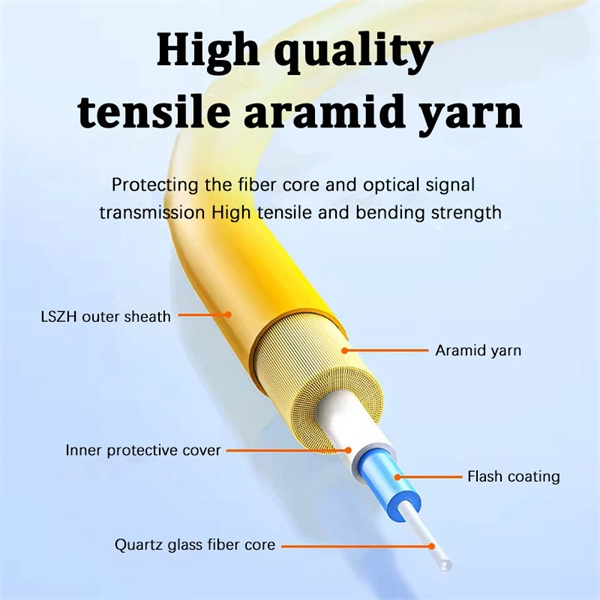
Can two switches with fiber ports be directly connected through fiber ports? The answer is yes. The connection between two or more Ethernet switches in a certain way (Uplink port, etc. ) is. If you have multiple Ethernet switches that need to be connected over long distances, fiber is obviously a preferred choice. Moreover, when it comes to bandwidth, no currently available technology is better than single-mode fiber. ) is called the cascade. I need to connect a single 3750G - 48 ports switch to a single 2960 - 48 ports switch and it needs to be through a fiber. So, PCs connected to one switch would reach the PCs from the other switch. Well, I. Other than entry level network switches, most of today's network switches include one or more GiBC (Gigabit Converter) or SFP (Small Form-factor Pluggable) slots. SFP modules insert into these slots and and require two strands of fiber, typically duplex Using multi mode fiber (for runs under 1000. Fiber optic cabling is increasingly used to connect network switches and other datacom equipment, especially in long-distance and mission-critical applications. Fiber provides: Increased internet signal bandwidth. Most modern fiber-enabled network switches require an SFP transceiver module. I have an issue when connecting two switches with fiber. The switches connect as expected when in the same room and connected using 1m or 3m patch cables. This is where it gets strange.
[PDF]