By combining compact laser sources with sub-1 ml volume and ultrastable optical cavities, this work enables extremely compact and robust ultrastable laser systems with applications in low phase noise microwave generation, sensing, and satellite ranging. The Laser Light Screen System faces critical technical challenges in high-speed, long-range target detection: when a target passes through the light screen, weak light flux variations lead to significantly degraded signal-to-noise ratios (SNRs). Traditional signal processing algorithms fail to. Ultra-low-noise microwave signals play a driving role in the development of modern scientific technologies such as radar, communication, and sensing. On-chip photonic integration provides an attractive approach for the implementation of ultra-low-noise microwave signal sources with attractive added. We demonstrate thermal-noise-limited direct locking of a semiconductor distributed feedback (DFB) laser to a sub-1 mL volume, ultrastable optical cavity, enabling extremely compact and simple ultrastable laser systems. Using the optoelectronic laser locking method, we realize over 140 dB. Here we address these shortcomings with a hybrid optoelectronic approach that combines simplified optical frequency division with direct digital synthesis to produce tunable low-phase-noise microwaves across the entire X-band (8–12 GHz). Traditional signal processing algorithms.
[PDF]
This article deals with a thorough investigation of the energy internet towards future emerging technologies for energy distribution and management to solve existing limitations and enhance the performanc.
[PDF]

A comparative field evaluation of six medicine quality screening devices in Laos. Lao-Oxford-Mahosot Hospital-Wellcome Trust Research Unit, Microbiology Laboratory, Mahosot Hospital, Vientiane, Lao PDR. See "Evaluation of portable devices for medicine quality screening: Lessons learnt, recommendations for implementation, and future priorities" in PLoS Med, volume 18, e1003747. However, there is little independent evidence on their field utility and usability to inform policy decisions. This pilot study in the Lao PDR tested six devices' utility and usability in detecting substandard. Substandard and falsified (SF) antimalarials have devastating consequences including increased morbidity, mortality and economic losses. Portable medicine quality screening devices are increasingly available, but whether their use for the detection of SF antimalarials is cost-effective is not. Screening for SF medicines in supply chains ('post-market surveillance') by medicine inspectors is crucial but currently relies only on subjective visual inspection of medicines in most countries. Many innovative portable screening technologies now exist and could be key additional assets to the.
[PDF]
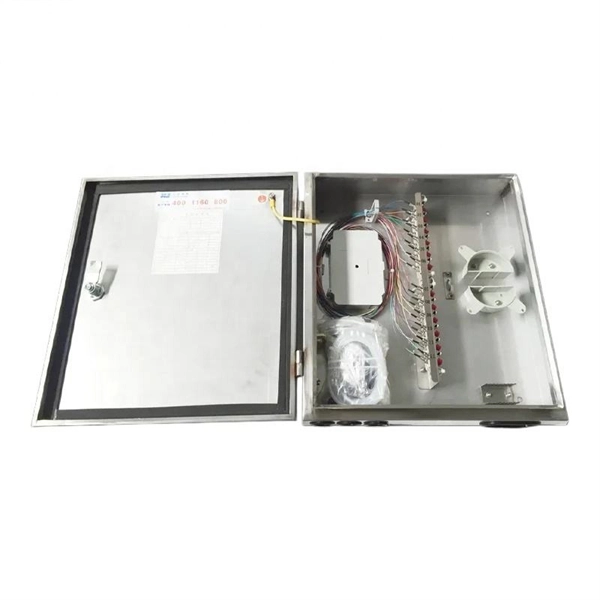
You simply multiply the number of splices by the estimated loss per splice. It's that easy! ✨ Let's say you have a long fiber run that requires 4 fusion splices to connect different cable segments. 4 dB is the total attenuation you'll add to your loss budget just for the. Fusion splicing is the process of fusing or welding two fibers together usually by an electric arc. Fusion splicing is the most widely used method of splicing as it provides for the lowest loss and least reflectance, as well as providing the strongest and most reliable joint between two fibers. There are several ways to know the number of multi-spliced cores. For example, 12 core fibers, 12*2=24 cores, 12 cores at the beginning and 12 cores at the end; 2. Count the number of optical fiber. Calculating the total loss from splices in a cable run is wonderfully straightforward. Connectors: Total number of connectors in design. Laser: A device which produces a single frequency light. The guide provides the complete workflow, covering safety precautions, tool selection, fiber preparation, fusion operation, quality control, and. Recommendation ITU-T L. 12 specifies splices of single-mode and multimode optical fibres. It describes suitable procedures for splicing that should be carefully followed in order to obtain reliable splices between single optical fibres or ribbons.
[PDF]